Showing posts with label sustainability. Show all posts

Thursday, July 9, 2015

Step One to Responding to Climate Change is to Learn What is Really Going On

"We need the deniers to get out of the way. They are risking everyone's future.... The Koch Brothers are criminals.... They should be charged with criminal activity because they're putting the profits of their business ahead of the livelihoods of millions of people, and even life on earth." - Jason Box, in "When the End of Human Civilization is Your Day Job," Esquire


Read the above article. If you're reading my blog, you probably already know that Climate Change, aka Global Warming, is a real thing. You may have posted similar articles on Facebook, and gotten "likes" from other people who also get that it's real, and snarky comments from your two friends who think it's just liberal hogwash. But you know it's not just real, it's here, now, and it's speeding up.

You probably feel a sense of dread and hopelessness, because you also know that there is no way to "go back" to where we were, to a not totally destabilized planet. You just hope that grassroots organizations can do enough to help us deal with the changes underway, providing solutions like floating houses run by solar energy for the billions of people displaced by rising seas. You sense that governments aren't going to do enough.

You know why they aren't? Because they are in too deep in the bullshit of running the world.

I'm reading Lies My Teacher Told Me: Everything Your American History Textbook Got Wrong by James W. Loewen. One thing Loewen returns to repeatedly, an invisible theme of public school history education, is that the mythologies of our nation holds more credence than actual fact, especially if that fact flies in the face of said mythology. One of the United State's sacred mythologies is that our nation is a peace-keeping good guy that steps in like a kind big brother to fix the world's ills. The fact is, however, that "the United States now spends more on its armed forces than all other nations combined and has them stationed in 144 different countries," (222) and while many of these stations are in the name of "peace keeping," much of them are actually in support of the financial growth of multinational corporations like ITT and Monsanto. Some of these multinationals have budgets larger than those of most governments. And if those companies want something from foreign soil, our federal government is more than happy to step in and push things around until they get what they want. Like deposing Prime Minister Mossadegh in Iran in 1953, bringing down the elected government of Guatemala in 1954, rigging the 1957 election in Lebanon, repeated attempts to kill Fidel Castro, and I'm sure many other and more recent (in the book he gives these older examples to make sure textbooks had time to include them) examples of ways the US takes over other countries in the interest of economic gain.

A huge part of this economically-motivated international bullying is, of course, about oil. "In Equatorial Guinea, for example, oil companies pay millions of dollars to the regime's leaders for the privilege of taking the country's oil... [T]hey pay royalties of only about 10 percent for taking Equatorial Guinea's oil -- far less than they would pay in a justly run nation." (225) While oil companies and the federal government are paying "far less than they would," however, they are paying insane amounts of money to extract oil around the world. In the article "The New Abolitionism," Christopher Hayes writes,
Fossil fuel extraction is one of the most capital-intensive industries in the world. While it is immensely, unfathomably profitable, it requires ungodly amounts of money to dig and drill the earth, money to pump and refine and transport the fuel so that it can go from the fossilized plant matter thousands of feet beneath the earth’s surface into your Honda. And that constant need for billions of new dollars in investment capital is the industry’s Achilles’ heel.
 He doesn't mention to cost spent on the armed forces used to occupy the countries we get oil from.

So here is where I suggest we put our efforts in attempts to slow Climate Change (in addition to efforts to mediate its effects on us humans, like the floating houses and local, organic farming): Pull out of other countries. Stop spending money on creating corrupt governments. Stop spending money on digging, drilling, and surveying for oil. Put those billions of dollars into expanding renewable energy, building renewable energy sources in other countries (that actually would be a Good Guy move), and reducing poverty at home and abroad. Not because we want to control other countries but because we humans are in this together and its the right thing to do.

Naive? Simplistic? Probably. But also our only real chance for our grandchildren and children to not go extinct, and it's our imperative as members of a sacred and dynamic earth.


Monday, June 1, 2015

Screen Time and Nature Play: Both Together Will Save the World


You have no doubt read that kids these days spend too much time on screens, and too little time outdoors. Articles and books arguing the evils of screen time quote studies linking screen time to obesity and diabetes as well as depression and lack of vitamin D (which can lead to cancer).

Then there are the equally compelling articles and blogs that posit that playing computer games is actually really good for our children. They learn hand-eye coordination, three-dimensional design, problem solving, and even social skills. They are exposed to math concepts, story arcs, and consequences. 

Which perspective is to be believed? I think it's both. Kids benefit greatly from screen time, and they need to also spend lots of quality time in nature. 

I suspect that the problems of screen time arise not from the computer or TV itself, but from circumstances outside the screen bubble, like poor nutrition and lack of attention from caregivers. I also sense that the debate - too much screen time? too little nature time? too much testing? - about what kids should really be doing with their time has more to do with our adult compulsion to control things than about kids themselves. The fact is, we cannot control the future. Sure, we can give our kids good nutrition, and that will give them a huge leg up in future health. We can make sure they learn to read, speak clearly and assertively, and perform math skills so that they can  follow whatever field they wish. But we don't know what jobs will exist in the future. We don't know what discoveries and experiences they will have that will lead them into a certain field. We also don't know what the changing planet will mean for them, although we have some ideas.

Climate change is here, as evidenced by crazy weather, acidifying seas, and melting ice caps. Because we refuse to turn off the CO2 machine, it's only going to get worse (and in fact, even turning off the machine wouldn't help for 100s of years, as we've already crossed the threshold of CO2 levels in the atmosphere). This is one reason why it is imperative that kids get to know the natural world. "If sustainability depends on transforming the human relationship with nature, the present day gap between kids and nature emerges as one of the greatest and most overlooked crises of our time, threatening people and countless other species. Helping children fall in love with nature deserves to be a top national priority, on par with reducing greenhouse gas emissions and preserving species and wild places," writes Scott Sampson in How to Raise a Wild Child: The Art and Science of Falling in Love with Nature. 

But, consider the skills a child learns while exploring biomes in Minecraft, building houses and fighting zombies. She learns, in short, to craft and defend a world. She learns to keep trying when she is doomed. She learns to ask questions about how to solve problems, and learns how to find answers to those questions. These skills will help our children save our warming planet or learn to adapt to it just as much as a love of nature will. 

So I encourage parents, educators, and policy makers to stop arguing about the evils of screen time and whining about how little time kids get outside, and seek a powerful balance. Take kids outside. Let them use the same skills they so love in video games as they explore, question, and discover. Give them time to fall in love with nature. Then encourage them to do the same on a computer. What they create will go beyond anything we as adults could try to craft or force through their carefully controlled educations.

I believe it will be young people who love nature and are really skilled at well-created video games who will create technologies, policies, and plans that will bring our species into the next phase of human life on Earth, one that responds to the changing planet in a positive way. We can support them in this by bringing them outside and supporting their love of technology. It isn't an either/or situation, it's both-and. Nature and technology, engineering and love.


~~~~~~~~~~~~~~~~~~~~~~~~~


For more ideas on natural parenting, 
check out my book! 

Monday, March 24, 2014

The Simple Life

Sustainable Living

Here's a great resource for spring:

The Simple Life Forum at Daedalus Books

Ideas to Nourish & Sustain
Growing Your Own, Preserving Your Own

"In its broadest sense, the idea of sustainability covers a lot of ground, from growing our own produce in a kitchen garden to finding responsible land and water management practices that we can sustain far into the future. Sustainability and preservation are also at the heart of what we do at Daedalus Books, which was founded to find a second life for remainders—good books that might otherwise be destroyed simply because publishers can't afford to keep them in stock."

Submit your favorite farmers' market via email on their site!


The Way of the Hen: Zen and the Art of Raising Chickens


Daedalus is featuring, among other fabulous books for living simply, my own book, The Way of the Hen. It's only $3.98 right now! Perfect gift for anyone who loves chickens.


Tuesday, February 25, 2014

When a Chicken Isn't Just a Chicken

A year ago I met with two other women at one of their kitchen tables to discuss getting backyard chickens legal in my city. We had to convince City Council that keeping backyard hens wasn't just a back-woods fallback to Farmville, nor did it mean roosters, slaughtering, smell, or other dangers and nuisances. We had one vote in favor, the woman whose house we met at.We needed six "yes" votes in order to get the ordinance passed. Most of council was adamantly opposed to the proposed ordinance, which had been soundly turned down a few years earlier. They were afraid of "those people" who will not act responsibly in caring for their hens (i.e. immigrants and renters).

So we launched a grassroots effort to let Council know that people wanted hens. I started a blog, created flyers, and posted on a few websites like backyardchickens.com. A woman emailed me offering to setup a Facebook page. We met at a local school, sometimes with nearly two dozen people, but usually with two or three. Our Council woman lead us through the maze of politics, I ran the web end of things including a petition on Change.com, and others got signatures on a paper petition. People spoke at council meetings. We used social media and word of mouth to get people on board.

We started out with nothing. With major opposition. Last night, with 220 likes on the Facebook Page, more than 1000 page views on the blog, and over 600 signatures, Council voted to change the proposed amendment! We wowed them with our political presence - ninety people showed up for the meeting where the official vote would occur, with kids in tow. A dozen people spoke in favor. One person opposed came to speak, but when he saw the ninety people stand in support, he removed his name from the speakers list and walked out!

What we showed Council was that a chicken isn't just a chicken. They stand for sustainability, food security, community, responsible action, and personal freedom. Most people who want to keep chickens are responsible members of society. We stood up against racist and classist fears about hen keepers.

We also showed our community that if something matters we can work together to get it changed. I hope to use that power to keep moving - fine tuning the ordinance, but also involving more diverse populations in our gardening and sustainable living movement.

There are a million and one actions that need to happen in our world, and as many people and more who have different opinions about what "matters." Many might roll their eyes at how insignificant this movement is. But I'm proud of our little movement to support backyard hens in my corner of the world.


~~~~~~~~~~~~~~~~~~~~~~~

Into backyard henkeeping? Check out my book,


Saturday, December 15, 2012

Discussion Questions for Clea Danaan's Voices of the Earth

To study Clea Danaan's Voices of the Earth: The Path of Green Spirituality with a group, or to explore further journaling and personal growth ideas, here are some discussion questions to get you started. Each chapter also ends with project ideas and journal questions.

  • What I call a "nature intuitive" just means someone who listens to the land and gains connection and wisdom there. In what ways have you heard trees, stones, rivers, and animals? In what ways do you doubt this channel? What helps you trust it?
  • Opening to the rhythms of you body and the land can open the door to a lot of pain and discomfort. Sometimes you can ameliorate this discomfort: drink a glass of water, do yoga, water a tree, even organize an effort to clean up a polluted river. Sometimes the pain is overwhelming. How can you draw on community to seek healing for yourself and the land?
  • Walking the path of an awakening human requires compassion and non-judgmental vision. In what ways can you be more compassionate towards yourself? Towards others? In what ways do you find yourself being judgmental towards others - me (the author), New Agers, Pagans, Republicans, big oil executives? Meditate on your judgment to see what lessons it offers you.
  • Pages 51-52 list questions about Home. These would be an interesting discussion for a group. "What does it mean that you are in this spot on the global web?" (p 56)
  • What gets in the way of your clearing clutter? What does this tell you about yourself?
  • What plants are you drawn to? Herbs? Entheogens?
  • How about animals?
  • What is your quest as an earth ally? This can mean many things - we don't all have to go sit in a redwood tree for two years or start an organic farm. For more on your quest, see Bill Plotkin's Nature and the Human Soul.

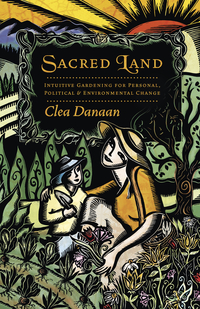
Discussion Questions for Clea Danaan's Sacred Land

"In this positive and practical handbook, Danaan shows how organic gardening can germinate environmental awareness and political change while feeding your spirit. You'll learn how to plan and plant your garden, create compost, save seeds, conserve and transmute water, connect with garden goddesses, and incorporate planetary energy in your garden." - From Llewellyn.com


Thinking of studying Sacred Land in a group? Or delving more deeply into your own intuitive organic gardening practices? Here are a few study and discussion questions to help you get started.


Discussion Questions for Sacred Land

Earth

  1. What messages, sensations, and images do you receive when you "tune in" to the soil? Is doing a practice like this strange to you? What fears or concerns do you have about "talking" to dirt? 
  2. What shifts for you when you consider a garden a co-creation with nature? What ideas germinate when you enter into such a relationship with the land?
  3. Many people first notice nature spirits or the energy of the land through trees. What sacred experiences with trees have you had?
  4. What can you do to increase the local and organic food you eat? As a group or a family, take it on as a project. If you already eat mostly organic and local, how can you help others do the same?

Air

  1. Discuss your intentions for your home, garden, and community. How can you call on the power of air to bring these ideas into the world?
  2. Do you fear insects? Why? Take some time to get to know them better. What teachings have bees, dragonflies, and even mosquitoes taught you?
  3. What birds show up in your life regularly? Have they a message?

Fire

  1. Everything we see, eat, touch, and hear exists because of the sun. What happens when you meditate on this idea for a few moments?
  2. The fire goddess Chantico teaches us about pleasure and pain. When have you felt this keen edge? What has it taught you about life?
  3. What does it mean to you to reclaim your passion? How can you begin to do this?


Water

  1. We are emotional beings of water. As you read this chapter, what do you notice about your awareness of and relationship with water in your daily life?
  2. If you are working with a group, practice transmutation (p 208).
  3. What is your work as a sacred sister?

You will find more discussion questions at the end of Sacred Land, on page 229. 

Friday, June 11, 2010

Agricultural Biodiversity and Sustainability for the Future (Guest Post)

Thank you to Jack Lundee for submitting the following guest post.

_____________________________________________

June 7th, 2010

Agricultural Biodiversity and Sustainability for the Future

"…In other environmental issues we tell people to stop something, reduce their impact, reduce their damage…" - US Ecologist Gary Nabhan

Since the beginning of the green movement, there has been a rise in the number of organizations and businesses that are doing their part in the promotion of sustainability through conservation. This past Earth Day brought about the Earth Day Network, which has been playing its part to bring conservationist and green enthusiasts together, sharing ideas and discussing new ways to support the planet. Other large organizations non-profits like Doug Band and the CGI (Clinton Global Initiative) have been working on successful emission reduction projects in the San Francisco Bay area. All the while, the climate is continuing to worsen, and individual, as well as collaborative acts, are important for any successful green campaign. As human beings, we're constantly told to reduce our carbon footprint, consume less unhealthy foods, and spend less time in the shower! But let's take a minute to step back and look at this from a different perspective; one that Gary Nabhan strongly suggests.

Gary Paul Nabhan, phD., is a Arab-American writer/conservationist who's extensive farming work in the U.S./Mexico borderlands region has made him world renown. Specifically speaking, Nabhan is known for his work in biodiversity as an ethnobotanist. His uplifting messages and attitude towards life and culture has granted us access to multiple beneficial theories including his latest of eat what you conserve.

According to The United Nations' Food and Agriculture Organization, about three quarters of the genetic diversity of crops been vanished over the last century and that a dozen species now gives %90 of the animal protein eaten globally. In accordance, just 4 crop species supply half of plant based calories in the human diet.

Nabhan claims that by eating the fruits and vegetables that we are attempting to conserve/save, we're promoting the granular dissemination of various plant species. But this goes beyond what we typically buy in supermarkets, particularly because of price and abundance. We must remember to try new things and immerse ourselves in the very concept of diversity. Keep in mind; the benefits of splurging for that costly fruit/vegetable supremely outweigh the cons. Not only does one promote biodiversity and further eliminate the need of farmers to remove rare, less purchased crops off their agenda, but one also effectively encouraging healthier lifestyles.
Agriculturist Marco Contiero mentions that "biodiversity is an essential characteristic of any sustainable agricultural system, especially in the context of climate change."[1] Contiero believes that people should eat localized crops, spending less time purchasing imports and becoming heavily reliant.

According to Conterio's theory, this would suggest that we, as individuals, tend our own crops/plants, and make sure to purchase localized farm products at supermarkets and groceries. In the end, this condenses export/import reliance, thus reducing our carbon footprint.
Nabhan and Contiero's theories both rely profoundly on an action oriented approach at conservation and sustainability. With an abundance of green movements following Earth Day 2010, organizations and individuals have taken a stronger following to expert opinions like the ones demonstrated by both of these highly influential agriculturalists. So remember, when the fall season approaches, be sure to visit your local apple orchard to pick some fresh fruit. Also, as eco-conscious individuals, don't hesitate to stop the next time you drive by a yard stand with fresh crops. Promoting biodiversity and localized farming is a crucial piece of the conservation puzzle.

Jack Lundee – Supporter of all things green and progressive.

_____________________________________

Want to submit a guest post for my Intuitive Gardening Blog? Send me an email and we'll talk! clea at intuitivegardening dot net.

Sunday, January 17, 2010

The School Garden Movement: Farcical Fad or Fabulous Foundation

Caitlin Flanagan's Atlantic article argues that school gardens are robbing students of a "real" education, especially immigrant students whose parents work the fields. She writes, "The cruel trick has been pulled on this benighted child by an agglomeration of foodies and educational reformers who are propelled by a vacuous if well-meaning ideology that is responsible for robbing an increasing number of American schoolchildren of hours they might other wise have spent reading important books or learning higher math (attaining the cultural achievements, in other words, that have lifted uncounted generations of human beings out of the desperate daily scrabble to wrest sustenance from dirt)." Blogger Ed Bruske and others have already provided fantastic arguments against Flanagan's essay, but I wanted to add a few points from my own homeschooling, intuitive gardening perspective.

It's not just science, writing and math that kids learn from the garden. It's not just that their whole regard for their bodies' and where food comes from improves. Or that they learn about the positives of diversity and how to overcome hardship by working together. People who garden, kids or adults, in schools or at home, are more grounded people. Which is to say they entrain with the energy of the garden. Though they probably don't know it, they spend time working with nature spirits. They learn about seasons and dirt and weather, not just from books but through their bodies.

Kids who DO things instead of just learning about them truly learn things, and more importantly they build the foundations for higher learning, as in the Benezet study in the 1930's that found that children learned math better if they weren't given formal math training until 7th grade. Their education focused on the ability to think, read, and discuss their thoughts with others (what Benezet called "read, reason and recite"). These kids who weren't taught rote math were then able to pick up higher math concepts very quickly when older - much more quickly than those with "formal" training in long division and fractions.

That is what kids in gardens are learning. They learn to communicate with each other and with the land. They learn about self efficacy. They learn to learn. And perhaps they also learn that the hard work their parents do or did in the fields is of value, that poverty doesn't come from dirt under your fingers (or pesticides in your lungs) but compartmentalizing classicism that separates "learning" from "doing" and values reading over real relationship with the earth.

Saturday, November 21, 2009

Hope for the Healing of the Earth


Ecologists are discovering that when wetland areas are restored, having been used for nearly 100 years for agricultural purposes, that the land bounces back amazingly quickly. While some native species are reintroduced, many spring back to life on their own, having waited all this time in the soil seed banks.

This shows us the wisdom of the planet. She can bounce back - if (a big if) we can follow her ways and let a wetland be a wetland, she can gracefully and fairly quickly restore balance. The question, of course, is how to let a wetland be a wetland when we need to grow food, build houses, and pave streets. We - and she - have to share.

Providing habitat for native species in yards is key. Get rid of lawns, plant native plants, provide water features and shelter. Building paths for wildlife where there are freeways helps, too. Urban permaculture offers exciting opportunities for integrating food with everyday life and reducing our impact. Of course green building, habitat restoration, and simple things like riding bikes all helps.

Finally, for those of us who honor the earth as sacred and alive, prayer, ritual, and attunement with non-humans also helps heal our relationship with the planet. In conversation with the earth we can be given ideas and tools for sharing and balance. Right now, as you read this, look out the window. Rest your eyes on a tree or another natural being. Let your mind relax. Let your energy and attention reach out to the tree. Sit with that feeling for as long as you like. What happens in your body? What might happen in the world were we all to relate to non-humans this way?


For further reading:


Monday, May 18, 2009

Little Farms Can Change the World: Leah Gauthier's Sharecropping Project

I read about artist Leah Gauthier's Sharecropper project in the September/October 2008 issue of Natural Home Magazine, and went to check out her site. What a fantastically cool idea!!

From her site:

"Sharecropper, is a micro farming installation, by Artist, Leah Gauthier happening in New York City, summer of 2009.

"I am stitching together a working micro farm, (total size yet to be determined) for one growing season, from parcels of donated land or growing spaces, located in assorted environments in each of the five borroughs around the city. Possible sites include, private residences, office buildings, schools, small business, non-profits, hospitals, galleries, museums, community gardens, government facilities, and vacant lots. Working under a traditional sharecropper agreement, rent will be paid with a portion of my harvest, and the balance shared with local soup kitchens."


This is EXACTLY the kind of project that can reshape the way we live on the planet.

Check out her site and blog at http://leahgauthier.com/sharecropper/ to be inspired!

Thursday, August 28, 2008

Sustainable Indulgence: Chocolate, Coffee, and Wine to Save the World

I was semi-guiltily munching on Sunspire chips and reading the label to make me feel better about my sweet indulgence. The chocolate chips have unrefined sugars and natural colorings. And they're so good! Then I read that Sunspire directly contributes in a positive way to the lives of their cocoa farmers. I went online to research; you can read more about their "Caring for Cocoa Communities" on their website.

That got me thinking about other indulgences that can make a difference through practices and policies promoting sustainability and social justice (which are closely related). Here's some of what I found out:

California wineries, producing 90% of U.S. wine, are moving toward organic and sustainable practices like more appropriate irrigation, the Organic Consumers Association reports.

Many wineries are offering biodynamic wines, which Jack Everitt of Fork & Bottle has listed.

Shade grown and organic coffees make a big impact, from improving the lives of the farm workers to providing or protecting habitat for migrating birds.

Tea makers are also moving towards sustainable practices, as reported on TreeHugger.com.

Here is another nice blog about sustainable tea.


So - there you have it. We can have our cake, eat it, save birds, make agricultural worker's lives better, and reforest the land. Ask your local natural grocer to carry these products, buy them, and enjoy!

Thursday, March 20, 2008

Preparing for Spring: Celebrating Ostara on the Urban Homestead


Today is Ostara, the first day of spring! I got the perfect Ostara gift in the mail - my spring shrubs! I was so excited. Felt like Christmas, only better. I put in two grape plants, three blackberries, five tiny junipers, and a red stick dogwood. Oh, it felt good to dig in the dirt and get to know my garden again. I cannot think of a better way to honor the growing days of light. March 25th used to be the first day of the year, and I'll tell you, it feels that way to me. I begin again.

These plants are part of my vision to have an urban homestead where we raise much of our food. I hope to get chickens this year as well, and as always have big plans for the vegetable garden.

Whenever I put in seeds or new shrubs or landscape elements, I feel more at home here. My house is home, my land is home, and the planet is home, a place I can grow and learn and wonder. I am living more and more in direct relationship with the earth that supports me. It will feel even more so when I taste those first fruits in a few years.

Now is the time to listen to the land. Let it speak to you, invite you to become more a part of your home. Maybe that means putting in fruit trees, or starting a window box of herbs, or installing solar panels and looking into an electric hybrid car. What will you do this spring to care for your eco, your home? I'd love to hear about your dreams, plans, and ideas.

Happy Ostara!