Showing posts with label organic gardening. Show all posts

Monday, November 18, 2019

Study on Creation Spirituality at The Land: Class Three

I've recently found a faith community called The Land,  a Methodist-based outdoor church dedicated to social justice and the Earth.

I have been leading the morning study using Matthew Fox's book Creation Spirituality: Liberating Gifts for the Peoples of the Earth. I am sharing the class curriculum plus a few notes here. Read class one here. Class two can be found here.

Here is class three.

Creation Spirituality at The Land, Class Three


Week 3
Chapters 2-3: Focusing on Compassion, Creativity, and Beauty

Compassion
“Compassion is the moral law of interconnectivity, the cosmic law of responding to another’s pain and suffering as well as to another’s joy and celebration.” P 45 (all page numbers are from Matthew Fox's  Creation Spirituality: Liberating Gifts for the Peoples of the Earth.

This is what the Lord Almighty said: ‘Administer true justice; show mercy and compassion to one another. Do not oppress the widow or the fatherless, the foreigner or the poor. Do not plot evil against each other.’

Yet the Lord longs to be gracious to you;
therefore he will rise up to show you compassion.
For the Lord is a God of justice.
Blessed are all who wait for him!

Compassion is not sentimentalizing, or pity. It requires feeling with – which makes us face our intensity tolerance. I shared the story of when I was studying at Creation Spirituality University and took a class on compassion. For our final paper we had to write on an act of compassion we would like to serve. How I wrote about helping a friend who had just had a baby and treating a schizophrenic homeless woman as a human being. And how I failed. What I didn't understand then was that I was still thinking of me and them, not us, not suffering with. 

We discussed compassion, and one of the class members shared brain studies on how compassion is contagious. 

Creativity
“Birthing, begetting, dying, and being born – all this happens to stars and planets, to galaxies and microbes, to plants, birds, animals, and humans.” – p 47

Proverbs 22:29
Do you see someone skilled in their work? They will serve before kings; they will not serve before obscure men.

Colossians 3:23-24
Whatever you do, work at it with all your heart, as working for the Lord, not for human masters, knowing that from the Lord you will receive the inheritance as your reward; you are serving Christ.

Beauty
I walk with beauty before me
I walk with beauty behind me
I walk with beauty above me
I walk with beauty below me
I walk with beauty all around me
Your world is so beautiful, Oh God.
                                                -- Navajo prayer, quoted on page 49

A class member said it made her think of the poem attributed to St. Patrick: 

“Christ with me,
Christ before me,
Christ behind me,
Christ in me,
Christ beneath me,
Christ above me,
Christ on my right,
Christ on my left,
Christ when I lie down,
Christ when I sit down,
Christ when I arise,
Christ in the heart of every man who thinks of me,
Christ in the mouth of everyone who speaks of me,
Christ in every eye that sees me,
Christ in every ear that hears me.”
― Saint Patrick

Which made me think of the Cosmic Christ.


1 Peter 3:3-4
3 Your beauty should not come from outward adornment, such as elaborate hairstyles and the wearing of gold jewelry or fine clothes. 4 Rather, it should be that of your inner self, the unfading beauty of a gentle and quiet spirit, which is of great worth in God’s sight.


Discussion questions:
Any questions or things that struck you about the reading this week?
Where do you express creativity in your life?
What is an act of compassion you have witnessed recently?
What acts of compassion are you drawn to perform?
What is the feeling of beauty?
How do these relate?


We then took a meditative walk on the path around The Land holding the ideas of compassion, beauty, and creativity in our hearts!


Wednesday, May 9, 2018

How Do You Cook Orach?

Orach in spring


Every fall I pull up the lovely orange-and-red seeded orach plants and place them wherever I want orach to come up in early spring. A relative of the weed lamb's quarters, orach is also known as mountain spinach. It is like a slightly bitter, hardy spinach, and it is one of the first edibles to come up in spring. It doesn't bolt like spinach, and it can be eaten till you get sick of it. The high nutritional value of orach is discussed in this article.

Tonight I wanted to cook a large amount of orach in a manner similar to how I once had pigweed prepared by some local Somali Bantu farmers. I didn't have their recipe, but I studied a few greens recipes in a cookbook a friend gave me, Afro-Vegan by Bryant Terry. His recipes for collards and mustard greens guided my own recipe.
First I picked an overflowing large mixing bowl of greens by cutting them below the leaves. They will grow more greens in a few weeks. I also cut a Welsh onion, which is a perennial green onion, and some garlic greens. I  soaked the greens in the sink to remove any dirt, and gave everything a rough chop. 


I heated some olive oil and added three garlic cloves, sea salt, about a quarter cup of spaghetti sauce, a tablespoon of maple syrup to cut the mildly bitter flavor of the greens, and two teaspoons of tahini. Then I let it simmer for at least 30 minutes to cook down. I served it with quinoa and dal. Oh my goodness! It was so good!


~~~~~~~~~~~~~~~~
Quinoa, dal, and orach
Orach with Welsh Onions and Garlic Greens

1 lb. orach or green of choice
1 Welsh onion or three scallions
3 small garlic greens tops, optional
3 cloves garlic, crushed and minced
2 tsp sea salt
1 tsp onion powder
1/4 cup spaghetti sauce or tomato sauce
2 tsp tahini or cashew butter
1 tbsp maple syrup
Rinse greens in a bowl of water or the sink. Chop garlic and onions and saute for a few minutes in olive oil. Rough chop greens and add them to the pot. Add remaining ingredients and stir until the greens cook down. Let simmer 20 to 30 minutes to meld flavors and gently cook greens. Serve on grain of choice. Hot sauce to flavor is also nice.


Monday, March 24, 2014

The Simple Life

Sustainable Living

Here's a great resource for spring:

The Simple Life Forum at Daedalus Books

Ideas to Nourish & Sustain
Growing Your Own, Preserving Your Own

"In its broadest sense, the idea of sustainability covers a lot of ground, from growing our own produce in a kitchen garden to finding responsible land and water management practices that we can sustain far into the future. Sustainability and preservation are also at the heart of what we do at Daedalus Books, which was founded to find a second life for remainders—good books that might otherwise be destroyed simply because publishers can't afford to keep them in stock."

Submit your favorite farmers' market via email on their site!


The Way of the Hen: Zen and the Art of Raising Chickens


Daedalus is featuring, among other fabulous books for living simply, my own book, The Way of the Hen. It's only $3.98 right now! Perfect gift for anyone who loves chickens.


Tuesday, February 25, 2014

When a Chicken Isn't Just a Chicken

A year ago I met with two other women at one of their kitchen tables to discuss getting backyard chickens legal in my city. We had to convince City Council that keeping backyard hens wasn't just a back-woods fallback to Farmville, nor did it mean roosters, slaughtering, smell, or other dangers and nuisances. We had one vote in favor, the woman whose house we met at.We needed six "yes" votes in order to get the ordinance passed. Most of council was adamantly opposed to the proposed ordinance, which had been soundly turned down a few years earlier. They were afraid of "those people" who will not act responsibly in caring for their hens (i.e. immigrants and renters).

So we launched a grassroots effort to let Council know that people wanted hens. I started a blog, created flyers, and posted on a few websites like backyardchickens.com. A woman emailed me offering to setup a Facebook page. We met at a local school, sometimes with nearly two dozen people, but usually with two or three. Our Council woman lead us through the maze of politics, I ran the web end of things including a petition on Change.com, and others got signatures on a paper petition. People spoke at council meetings. We used social media and word of mouth to get people on board.

We started out with nothing. With major opposition. Last night, with 220 likes on the Facebook Page, more than 1000 page views on the blog, and over 600 signatures, Council voted to change the proposed amendment! We wowed them with our political presence - ninety people showed up for the meeting where the official vote would occur, with kids in tow. A dozen people spoke in favor. One person opposed came to speak, but when he saw the ninety people stand in support, he removed his name from the speakers list and walked out!

What we showed Council was that a chicken isn't just a chicken. They stand for sustainability, food security, community, responsible action, and personal freedom. Most people who want to keep chickens are responsible members of society. We stood up against racist and classist fears about hen keepers.

We also showed our community that if something matters we can work together to get it changed. I hope to use that power to keep moving - fine tuning the ordinance, but also involving more diverse populations in our gardening and sustainable living movement.

There are a million and one actions that need to happen in our world, and as many people and more who have different opinions about what "matters." Many might roll their eyes at how insignificant this movement is. But I'm proud of our little movement to support backyard hens in my corner of the world.


~~~~~~~~~~~~~~~~~~~~~~~

Into backyard henkeeping? Check out my book,


Tuesday, April 2, 2013

Seed Saving: Start planning now - buy heirloom seeds

While you peruse seed catalogs and plan this spring’s garden, keep the end of the season in mind. Your garden’s plants offer more than beauty, medicine, and food, they also offer a promise for the future in their seeds. If you are a slightly more advanced gardener, or want to be, plan to save some of your seeds this summer by letting the plants go to seed.

You will need heirloom varieties — hybrid seeds do not reproduce true to type. Many seeds sold today are hybrids. Check to see that yours are heirloom or F2; F1 hybrids will not produce the same plant you gather them from.

Some seeds are more complicated to save than others. These need to be pollinated carefully (like corn) or are difficult to gather (like tomato). If you have never saved seeds from your garden’s plants, start with the easy ones like lettuces, orach, spinach, peas, beans, parsley and squash (that were planted far away from any other squash variety).

To learn more about seed saving, check out Seed to Seed by Suzanne Ashworth and my own Sacred Land.


Saturday, June 16, 2012

June 2012 Homestead Tour

Here's what's going on in our little suburban homestead.


I started these tomato plants from seed, and they have done better than any I've ever grown myself. The secret? Fertilizer. Specifically, they like (brace yourself) urine that has been watered down 20:1. They like a little salt, so a lower water to urine ratio works okay for tomatoes.


I'm growing all my tomatoes in pots this year. Our soil is so fickle and is heavy clay. No matter how much I amend (or fertilize) tomatoes don't like it. Actually, our first year here we did a lasagna garden (layered leaves, dirt, etc.) and they liked that fairly well. But these plants are doing so much better in pots.


Cucumbers also in pots, with a little hail damage on one of the leaves.


This one is a little hard to see, but demonstrates some of the animal residents. We have this old box elder tree that is rotting, but we can't bring ourselves to cut it down. We have trimmed off some of the dead branches to keep it safe and slow the rot. This branch, which is over the path going up to the upper garden beds, is hollow inside. The top black dot is a hole in which nest  starlings. The bottom black dot is a hole in which nest three rather strange looking and strange sounding flicker babies. Letting the tree be a part of the ecosystem has brought lots of life to our yard!


Under that branch grows our grapes. No grapes this year, but they are growing well. I've even successfully started a few branches from cuttings! Last year we had three grapes - as in three little round fruits - total. Needless to say the birds got them. This is a Pink Reliance variety, a table grape.


I'm letting this lettuce plant go to seed, and will save the seed for replanting. Behind it you can see an onion flower from one of the store-bought onions I popped int he ground when it started to sprout. I used the white outer parts and planted the inner sprouting part. I'll save those seeds, too.

At the bottom of the lettuce, to the left, is a honeydew melon that Sophie planted at one of the Denver Botanic Garden's homeschool days. I'm going to try a new squirrel repellant made from essential oils that I saw at a local nursery and hope we get a melon or two. Mostly so Sophie won't be devastated.


Another experiment, based on something I saw in a gardening supply catalog. I cut the top off a chicken feed bag and planted potatoes in the bottom. As the plants grew I covered them with compost. When they die back in the fall I can just dump out the whole thing to harvest the potatoes.


Two of our three baby apples. Also going to dose these with the herbal squirrel repellant. I look forward to our tiny fruit trees getting bigger. For now I have a baby orchard. This apple tree is the biggest. We also have a two-foot-tall peach, a tall but skinny plum, and a three-inch-tall cherry.

The chickens in their "outer" run posing with some hollyhocks. Wondering if I have treats for them. One of our hens is broody again, and we might get a chance to hatch some fertile duck eggs via her warm self!


Second crop of peas, replacing some bolted lettuce. This is the first year I have a bed here, in a shaded area by the patio. It seems to work well for cool season plants. I finally switched to the permaculture zone system and put lettuce, peas, chard, and carrots as close to the house as I could.


And lastly, evidence of leafcutter bees - the little circular holes. I decided I'm not up to beekeeping right now, but I want to get some mason bees, which pollinate but don't make honey. Hopefully leafcutter bees pollinate, too!

Tuesday, March 2, 2010

Is Keeping Chickens Right for You?


So you're considering raising a small flock of hens in your urban or suburban backyard, and you're wondering what it's really like. Is it a good fit for you? Here are a few things you might want to consider, both pros and cons.
  • Chickens poop a lot. The poop stinks (the runny kind - they make little round pellets that dry quickly and aren't so bad, and they make little stinky miniature cow pies). It's great for compost - I find the balance of nitrogen to carbon in the poopy shavings you get out of the coop to be just about perfect. It's fairly easy to spray the poop off the patio with a hose (get a sprayer attachment), and the grass likes it. It's not as gross as cat or dog feces.
  • They scratch. They love to demolish compost piles, mulch beds, garden beds, you name it. When we let our chickens free-range, we can count on needing to rake and sweep the pathways clean afterward. I contained my compost pile in wire mesh after having it flattened numerous times.
  • Chickens are curious. They aren't brilliant, but they aren't really dumb either. Leave open the backdoor or the garage door and they will go exploring. And they poop wherever they explore.
  • Egg production drops in the winter. There will be times when you will want to supplement with grocery store eggs and they just aren't as good - you get spoiled pretty fast. And there will be times when you have to give eggs away to friends and neighbors. We have four hens and we eat a lot of eggs, and that seems to be about right most of the time. We bought two dozen additional eggs a month this winter.
  • Chickens peck at the color red. So don't put a red shirt on your child when she goes to play with them. They will also peck fingers that are held out to them. And tiny toes.
  • Chickens are dusty. They take dust baths, they have shavings and hay, and they scratch in the dirt.
  • When they lay eggs, or when they want to lay an egg and another hen is in the box (you need one egg box for every six hens, although two doesn't hurt), they BAWK really loudly. So far the neighbors haven't cared. But you can't really keep them secret. Also, every child in your neighborhood will know you have them.
  • Chickens make sweet crooning noises when you talk to them. They have their own personalities (chickenalities?) and dispositions, just like any animal. Some will like humans, others will not. Ours are fine with our cats (the cats don't like the hens, though - but they don't go after them now that they are big as they are).
  • Hen care needs to be part of your routine. Every morning they need letting out and feeding and watering; every afternoon you need to check for eggs; every evening they need locking up and possibly feeding. You need to clean out the coop frequently. With out flock of four we do it once or twice a week. The deep litter technique of stirring it and letting it compost in the coop doesn't work well for our small coop.
  • When you go out in the morning to feed them and they make sweet curious crooning noises and you dump their litter in the compost, life is good. The garden is balanced. You've brought the country into the city. All is well.
Need more information? Check out mypetchicken.com and backyardchickens.com. Great websites with lots of information!

Saturday, January 23, 2010

Gardening with Baby


I wrote this over three years ago - my baby girl is now four-and-a-half. But I like the essay so I thought I'd post it here for all you gardening mamas.


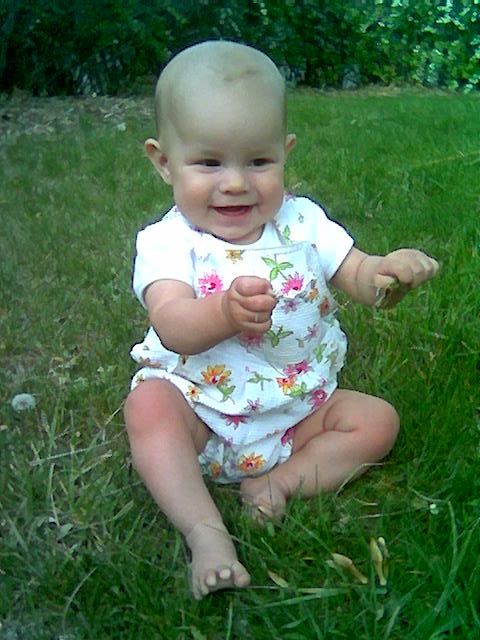
Though the days still float warm and sunny, the nights are cooling. Last week I consolidated some potted basil plants into one pot and brought them inside to over winter. I then let my twelve-month-old daughter go at it with the now plant-free pot I left outside, still half full of potting soil. This dark fluffy soil was more exciting to her than the chocolate cupcake we shared on her first birthday. She plopped both hands into the soil with a joyful yell: Dirt! Dirt all for me! I continued cleaning up the fall beds, weeding and mulching the kale, leeks, and radishes. When I turned to check on her, I found my daughter happily sitting in the fourteen-inch pot, dirt sprinkled atop her fuzzy head.

My little sprout loves the garden as much as I. We spend hours working and playing together outside, though frequently our goals conflict some. I would prefer my tomatoes to ripen, for instance, while one of her favorite pastimes is to sit next to the jungle of tomatillos and tomatoes, picking green fruits. She takes one bite, chatters at the hard orb like a squirrel, and tosses it into the mulch. This could go on for hours, I suspect. To save a few tomatoes, I relocate her to a shady patch of grass with some plastic pots to play with. She is happy for a while, but after not too long I see her monkey-crawling on hands and feet over to the pumpkin vine, where she likes to pat and scratch at the beautiful orange globe. Or sitting in the middle of the lettuce patch, babbling away and harvesting very baby carrots. Or perhaps plucking the irresistibly bright red heads off the geraniums.

With her help, the hoard of squirrels who share this land with us, and the short high-altitude season, I have not harvested quite as much this year from the garden as I would have liked. We have lived in this house just over a year, and the yard had been sorely neglected before we came, so I have worked hard to improve soil fertility and keep noxious weeds at bay. Every zucchini and carrot that makes it to maturity is worth a celebration; I got none of the strawberries, and out of six vines, only one pumpkin. In truth, though, I don’t mind. It has been a year of growing things other than food, including patience, a child who loves the earth, and a garden of exploration and discovery.

Many have said I was crazy to take on so much in the garden while learning to be a new mom, while caring for a babe. The garden, though, has kept me sane. When I don’t have soil to sink my hands into and a compost pile to tend, that is when I feel a little crazy. And it is here in the garden that my daughter seems to be happiest as well. She does not yet understand the connection between the plants and our food, but she knows the power of the land. When she was a week old, I removed her swaddle and tiny onesie and laid her on the grass. She relaxed into the Earth in the same way she would mold herself to my own body.

Now, a year later, she is almost walking. I ask her if she wants to go outside, and she speed crawls for the back door with a yelp of delight. I used to have to fish grass and wood chips out of her mouth. Then I had to make sure the tomatoes she picked were too large to pose a choking hazard. Gradually I have been able to let her play by herself for ten minutes or more at a time, always keeping an eye on her while I do other garden tasks. It has meant, though, letting go. I’ve had to let go of the baby pumpkin she picked early, and of her clean clothes when she scaled the compost pile. To release the idea of a perfect urban garden, because I have chosen to stay home with her rather than work, and money is scarce. I’ve had to let go, too, of always being busy or productive, and have taken time to just sit and watch her sweet little self as she dumps dirt or mulch over her head with a toothy grin. So while she chomps on green fruit and uproots flowers, I am happy, for she will be my baby only once, and I am growing a child who loves the Earth. To me, there is no greater harvest.

Thursday, August 13, 2009

Letting Go of Garden Losses

Maybe next year I'll follow my own advice. I gave it to myself last year, but apparently I wasn't listening.

Last year I swore I would not plant any gourds - no squash, melon, or pumpkins. The squirrels eat all of them. No matter what. I wrap them in bird netting and cover them with blood meal (or menstrual blood, but this year all that is nourishing my babe - don't mean to gross anyone out, just telling it like it is). I can't spritz them with pepper spray because I fear it would get into my child's eyes and mouth.

I also told myself not to plant corn. Takes up tons of space, uses lots of water, and fertilization is spotty.

Much of my garden right now is squirrel-ravaged gourds and short, spotty corn. Also green tomatoes that are just thinking about turning red. Maybe. Tiny carrots and beets that don't seem to want to get bigger. A teensy patch of fall spinach in the middle of a bed I over planted with seeds that never germinated, or maybe got scratched by chickens.

The garden actually looks pretty good because all those squash and pumpkin plants have huge, vibrant leaves. With sunflowers (minus the actual flower) poking up in their midst. And corn that looks like it's getting somewhere. And huge bushy cherry tomato plants. Dotted with lots of little green orbs. But we're not eating much out of the patches right now. Oh well.

Being 35 weeks pregnant gives one a certain dose of accepting reality. The garden is what it is. We've had lots of lettuce, the carrots and beets and chard may be smallish but are yummy. The tomatoes will ripen, or in early September I'll make green tomato soups. The squash plants get added to the compost (probably why I have so many squash plant volunteers this year - last year's squirrel food!).

And next year I am planting only the things my family eats and squirrels don't, like green beans, tomatoes, and more carrots. Maybe. I'll let you know if I actually manage to follow my own advice to myself. By then I'll have a four year old and a baby starting to crawl. In addition to chickens and squirrels. Hmm.

Saturday, August 1, 2009

Ack! The Chickens are Drving Me Batty!


So I love my four renegade chickens. Renegade because we're kind of violating zoning laws to have them. But they are much quieter than our neighbors' dogs, we keep the coop safe and clean, and they will, I hope, soon lay eggs.

Meanwhile.

They love more than anything to do their little diggy chicken dance in bare dirt. Which in my garden means where I have just planted fall seeds. My daughter and I put in cabbage, spinach, carrots, mache, peas and chard. The chickens watched, blinking from bottom to top (did you know chickens blink upside-down?) with their orange eyes thinking, yes, my pretties, yes.... and then as soon as my back was turned they danced their happy selves across the dirt. And the bird netting we put up to keep them out. Then they ate the leaves off my only Brussel's sprout plant, which was only three inches tall and not getting taller, but still.

And then. They waddle over to the back patio and poop as all grazers do, randomly, prefering the same spots we prefer to walk. Like the door mat and under the patio table. My daughter shouts, "Just look out for the slimy poo right outside the door!" So I use the hose sprayer and spray down the patio and the mat, feeling bad for using so much water (the broom us just a mess for this task). I set the mat on the grass to dry. Ten minutes later it has three chicken turds on it.

They've been staying in the yard so far, but the other day it was cloudy and cool, so the driveway at the side of the house wasn't such a hot desert. Chickens like shade. They stay away from hot sun. They also like to explore. So once the driveway was not so hot, they thought they'd go check out the neighborhood. Did I mention we're not really supposed to have chickens?

So I, big pregnant belly and all, rigged up a makeshift fence between the garage and house. My materials included a rotted, nail-infested old porch banister and some leftover lengths of hardware cloth from the chicken run. It won't keep them in if they really want to go exploring (only a matter of time), but it will slow them down. Not safe for when the baby starts crawling, though.

Time for some real boundaries. Such a theme in my house these days, what with an almost-four-year-old princess, two spoiled cats, and now four cocky chickens.

My plan is to get some flexible fencing like deer netting and fence off a section of yard extending their run. It won't be safe from predators like the run and coop are, so we'll still have to put them in at night and keep half an eye on them, but it will keep them contained, give them more room to roam, and give them a shady area to play in.

Now I just have to do that project. After I do a few loads of laundry and bake some bread. The homesteading dream!

Sunday, July 26, 2009

Fall Planting! Tips from the garden...

"What're you doing, Mommy?" my three-year-old daughter asked, finding me sifting through seed packs in the hallway.

"Getting ready to plant fall veggies."

"Can I help?"

"Yes! We'll plant them tomorrow." Both of us smiled in rapture. My girl loves planting as much as I do.

I picked out spinach, carrots, peas, broccoli, cabbage, parsley, mache (aka corn salad), and chard. We already planted some seeds in a cleared bed - mostly mustard greens and beets - but since they haven't germinated I'm going to do the paper towel technique with this next planting. Put your seeds - just as much as you want to plant or slightly more if your seeds are a few years old - between a fold of damp paper towel and put into a plastic bag. Keep checking them and in a few days they will have germinated. Then carefully transplant to the garden (you can do this in summer because the soil is not freezing) into soil amended with compost (a tweezers works well for this task, picking up teeny rooting seeds and plopping them in the soil). Our compost is very high in nitrogen because of all the beautiful chicken poo we've been blessed with this year.

On a side note, if you have chickens or plan to, I highly recommend putting your compost in a shady area and either doing it as a simple pile as I do or in an open cage that is accessable from one side. It is our chickens' favorite hang out: cool, buggy, and speckled with little kitchen scraps. They turn the compost for us as they scratch and they poop all over the pile, adding nitrogen. We also toss all the cleanings from their run and coop on the pile and turn it in. Their poop is so high in nitrogen that a once a week cleaning of the chicken area yeilds a perfect balance of carbon (wood shavings) to nitrogen (manure). The compost breaks down very quickly and we can use it on the garden in a month or so. I have not had any problem "burning" my plants with manure that has not broken down enough with this technique even though it hasn't been composting long.

Anyway - tomorrow we will cover the beds with compost, weed, and get everything ready for seeds. We'll put some seeds in right away - carrot, parsley, peas (which I will soak tonight) - and others in a few days after they have germinated in their paper towel blankies.

Whee! So much fun.

Thursday, June 4, 2009

10 Things I Didn't Know About Chickens


...Until I raised four of my own in our suburban backyard (and this is pre-egglaying, so there is more to learn). In no particular order...

1. They put themselves to bed at night. Come dusk, they hop up into the coop and tuck in. Our four pile up on each other in a corner of the coop, though I keep adjusting their roost to see if I can entice them on to it. We shall see.

2. They are totally fun to just watch. A running chicken is really one of the funniest things ever. And no, I don't have to chase them, they run all the time as they poke around our yard. They sit in funny poses, they take dust baths, they do a little chicken dance to scratch at the dirt. Totally entertaining. Anyone who has chickens knows what I mean, and anyone who doesn't will think I've gone off the deep end. Which maybe I have.

3. They cost almost nothing to keep. I bought a fifty pound bag of chicken feed for less than $25. That will eventually get turned into eggs (the freshest there is!), and is already turning into awesome compost. My cats cannot boast such economy.

4. Along the compost theme, the nitrogen/carbon ratio of chicken poo to wood shavings we get from the coop, which we clean less than once a week, is ideal and breaks down very quickly. And it doesn't stink. I can smell it, but it's not unpleasant. (Poor cats. Can you see a theme here?)

5. They are really soft. Chickens look all tough and nearly reptilian, but their feathers are very soft. So are their legs. Who knew?

6. They make sweet crooning noises when they come over to say hi. Which they do whenever I sit in one place. One of our chickens is more imprinted on us, and therefore more friendly, but they all come over and croon. It's probably a plea for treats, but it's a very sweet sound. I also love the way they look at me: part curiosity, part affection, part wariness. All chicken.

7. They are fascinated with my cats. And not afraid of them at all. In fact, my boy cat is afraid of them. He is twice their size (but they're catching up to him). They are actually fascinated with just about everything, though somewhat easily spooked. They are chickens, after all.

8. I thought all chickens loved earthworms. Not ours. But they can catch a small green spider in the blink of an eye, and apparently they eat mosquitoes, too.

9. They eat dandelion seeds. Since I don't use any weed killer, this is a nice bonus. I have four chickens and a thousand dandelions, so you can guess who is winning, but it's a start. They also love pansies. Sigh.

10. They are really quiet. Apparently when they lay an egg they like to announce it, but for now the loudest squawk is quieter than a crow or a jay. Can't say the same for my neighbors' barky dogs. And no, we do not have a rooster, which you do not need to get eggs, so we do not bother the neighbors.

Can you tell I'm hooked? If you're considering chickens, I have three words of advice: Go for it! You'll love them!

Tuesday, June 2, 2009

Gardening is Easier Than You Think

Many people ask me when it is the right time to plant in their gardens, how to make compost, and other detailed questions to help them get started. They feel overwhelmed by gardening, which feels like this huge undertaking that will quickly pull them under. But gardening really is easier than you might think. All you're doing is playing with nature, and getting dirt under your nails and greens on the table in the process.

Take planting dates. While there are certain general dates to follow, like the first and last average frost date, or general seasons like spring or fall crops, the timing of planting is not as regimented as one might think. This is especially true if you live in a climate like mine, Eastern Colorado, where you just never know what the weather is going to do. I planted peas in February, for instance, crossing my fingers and asking the pea fairies to do their magic. Now at the beginning of May the plants miraculously did not freeze but are just now putting out peas. But other cool season seeds I put in, like chard and beets, didn't really germinate the first time. I think - though I'm not totally sure of course - that the second planting took. Which is to say I planted in a warm spell in February (way too early by the calendar) and then again at the end of March when we had lots of rain (unheard of here) and one of those plantings took root and are now finding their way into our salads and stir fries and soups.

But if in Coloroad you haven't planted greens by May, that's okay! You still can. When that 100 degree weather hits in a few weeks, the plants may need some shade cloth, or may bolt (which does not mean run around the garden like chickens, it means set seed really fast), or might just be fine. You just never know. Again, gardening has much to teach us about faith, patience, and letting go. It's not a set of hard and fast rules, but a relationship with the earth. Give your garden healthy soil (or help it build its own healthy soil, really) and make sure it has a balance of light, heat, and water, and you're good to go. All the other fancy stuff like nitrogen ratios and planting guilds and coldframes can come, and will be easy when you get there.

It's all about taking the plunge and learning as you go. A friend of mine tried lettuce in her garden this year for the first time. She couldn't believe how easy and yummy it is and was aghast at all the sub-par salad greens she's been buying at the grocery store for years. I think much of gardening is like this. You try something new that seems impossible, overwhelming, and confusing, and you find that a) it wasn't really so hard as you thought, and b) teh results taste awesome. Another friend is new to gardening altogether, and she is tentative but very excited. She asked me about composting the other day when she saw my very un-fancy pile of weeds, chicken poo, and kitchen scraps. I told her that in our climate (where it is usually very dry), you can't mess up compost. It may take a long time to break down if you don't have enough nitrogen (chicken poo, blood meal, fresh grass cuttings) or you put exceptionally large things in it (whole broccoli stalks, entire tomato plants). But that's okay - slow compost is actually just another style of compost. (Now, in Seattle I had really soggy gross compost on a wetland, but that's a different story and not hard to fix.)

If you are still feeling overwhelmed, simplify and think common sense. Like for planting dates: find out the average last frost date (online or ask at a local nursery or friend), then after that date you can put in warm season veggies - think summer tomatoes, snap beans, hot peppers, corn - the hot, summery foods. Before that date you need to wait until the soil is soft enough, then plant "cool season" things - think spring salads, peas, cooler stuff. After the average last frost date, cool season plants like spinach and lettuce can go in a protected area like under the corn (mache loves this) or in the shade of a tree. Keep the soil gently wet, mulch with compost, add a little organic fertilizer if things are looking slow or the soil is a bit thin, and give thanks to the fairies for helping everything along.

When I was in high school I went on a mountain climbing expedition. I hated it. I was terrified. But determined. My guide kept saying, "Trust your boots." I did my best, and my boots did keep me to the rock and the trail. So I pass on to you the same advice: "Trust your garden." Watch, listen, learn, play. You'll be so glad you did.

Monday, May 18, 2009

Little Farms Can Change the World: Leah Gauthier's Sharecropping Project

I read about artist Leah Gauthier's Sharecropper project in the September/October 2008 issue of Natural Home Magazine, and went to check out her site. What a fantastically cool idea!!

From her site:

"Sharecropper, is a micro farming installation, by Artist, Leah Gauthier happening in New York City, summer of 2009.

"I am stitching together a working micro farm, (total size yet to be determined) for one growing season, from parcels of donated land or growing spaces, located in assorted environments in each of the five borroughs around the city. Possible sites include, private residences, office buildings, schools, small business, non-profits, hospitals, galleries, museums, community gardens, government facilities, and vacant lots. Working under a traditional sharecropper agreement, rent will be paid with a portion of my harvest, and the balance shared with local soup kitchens."


This is EXACTLY the kind of project that can reshape the way we live on the planet.

Check out her site and blog at http://leahgauthier.com/sharecropper/ to be inspired!

Friday, May 1, 2009

Happy Beltane from the Danaan Suburban Homestead

It's actually overcast here in Denver metro, which makes me the Pacific NW girl rather happy. I've been loving the warm spring days interspersed with rain (rain!) and cool. Perfect. The garden is doing well, and in a few weeks our chicks will go outside. In my garden so far I have spinach, carrots, lettuces, peas, garlic, and chard. I also have a whole garden-worth of seedlings here in the office under florescent lights ready for the Mother's Day planting. We're also excited to get the chicks out around then as well - maybe earlier. One is ready (she has all her feathers), but the others are a week younger. And... the coop isn't finished yet! We built most of it out of free scrap wood from a friend, and purchased $150 worth of additional lumber and hardware. Can't buy a coop for that.

I also learned recently that my intuition was right: I'm gestating a baby boy! Our daughter will have a little brother this fall. We have his first name picked out and are working on the middle name. Right now for the middle name I like Colum, which means Dove (I think that might be his animal guide, as we were gifted with two dozen lovely mourning dove feathers in the back yard - but not harmed dove!), and Loren, which means Laurel, a powerful magical herb offering protection and Sight.

The economy has affected us in funny ways that teach me about faith. We got our property assessment today, and our property lost $60k in value last year. To me this is a sign we need to stay put, build our wealth in other ways like our suburban homestead and a healthy family, and ride the waves of unfolding. All is well.

My Beltane Blessings to you and yours! I'd love to hear updates from my readers on how you are celebrating this May Day by living your life to the fullest.

Wednesday, April 22, 2009

Tuesday, February 24, 2009

Crossing My Fingers - Early Spring Planting


It's been warm this week - seventy degrees yesterday and today. But it's February, and that means fickle weather at a mile high. We could stay mild, freezing at night, until May, but likely we'll get a spring snow. We hope. It's been so dry... but the long range forecast (by a local weather guy) suggests warmer and dryer than usual for March. Since I get itchy and depressed when it's spring-like and I'm not in the garden, I push my luck and plant early.

I have finally learned after years in this climate that even a Wall of Water won't keep tomatoes happy. My first garden here I actually put in tomatoes in March. Since our last average frost date is Mother's Day, well, you know that didn't go well. And then I tried it again a few years later.

This year I'm sticking to cool season plants. I turned a bed yesterday, dumping some poor unsuspecting and very sleepy earthworms into the sun (and then burying them again of course). The soil is very much "workable" so I planted carrots, beets, peas, chard, and mache. And I put in rhubarb plants! My back hurts and I'm tired, but oh, am I happy. I hope that if it does snow, it will be a nice warm blanket of moisture for my baby plants, and that they will be warm enough in the cool night soil to germinate.

I'm reminded how gardening is such a balm for my heart, mind, and soul. I've spent so much time writing about this phenomenon of the healing, spiritual garden, that I have gotten rather in my head. Getting dirt under my nails and teaching my daughter about the garden returns me to myself. And here I am writing about it - but I'm not going to analyze it, just enjoy the afterglow of a day in the dirt.

Happy planting!

Thursday, August 28, 2008

Sustainable Indulgence: Chocolate, Coffee, and Wine to Save the World

I was semi-guiltily munching on Sunspire chips and reading the label to make me feel better about my sweet indulgence. The chocolate chips have unrefined sugars and natural colorings. And they're so good! Then I read that Sunspire directly contributes in a positive way to the lives of their cocoa farmers. I went online to research; you can read more about their "Caring for Cocoa Communities" on their website.

That got me thinking about other indulgences that can make a difference through practices and policies promoting sustainability and social justice (which are closely related). Here's some of what I found out:

California wineries, producing 90% of U.S. wine, are moving toward organic and sustainable practices like more appropriate irrigation, the Organic Consumers Association reports.

Many wineries are offering biodynamic wines, which Jack Everitt of Fork & Bottle has listed.

Shade grown and organic coffees make a big impact, from improving the lives of the farm workers to providing or protecting habitat for migrating birds.

Tea makers are also moving towards sustainable practices, as reported on TreeHugger.com.

Here is another nice blog about sustainable tea.


So - there you have it. We can have our cake, eat it, save birds, make agricultural worker's lives better, and reforest the land. Ask your local natural grocer to carry these products, buy them, and enjoy!

Sunday, March 23, 2008

The Spiritual Practice of Organic Gardening


I've discovered an interesting and sad thing in trying to get the word out about my book Sacred Land: Intuitive Gardening for Personal, Political & Environmental Change (Llewellyn, 2007). There seems to be a fear or perhaps a disinterest among gardeners in talking about spirituality. I find this strange, because most gardeners I know would attest to the spiritual nature of their organic garden. Growing food and working with the land brings us face to face with Spirit, the Goddess, God, Life, the Powers That Be. But no straight garden blogger, radio show host, or magazine will talk about that. (Possibly it's the Goddess part that scares people? Is it safer to talk about God in the American garden?)

I think we dearly need a spirituality that includes the planet in order to save ourselves from our current environmental crisis. When the Earth is sacred, we will shift our values to live sustainably. We will stop the coal burning, gas guzzling, chemical spraying, and strip mining. We will honor our neighbors of all species. We will spend our money on living well in right relationship, and not killing ourselves, our children, and our planet.

These are goals most gardeners share, by nature of their reliance on and love for the soil, sun, and water that bless their hobby or profession. So what is it about naming the process of gardening integral, intuitive, and spiritual that leaves the gardeners so silent?

If you are a gardener, and you think gardening is a spiritual practice or brings you in contact with Spirit by whatever name, stand up and be counted. Our very lives may depend on it. I invite you to share your stories and thoughts here.