Showing posts with label gardening. Show all posts

Thursday, April 9, 2020

She Thought He was the Gardener

According to John 20, Mary Magdalene didn't recognize Jesus when she first saw him return to his empty tomb. She mistook him for the gardener. Why did he look different? Much of this story is metaphor, but not all. We are left over 2000 years later to figure out what is most likely historical and what is a metaphor. Both interpretations teach us about the nature of reality and also of Christ.

I am sitting with two questions about this story. Why a gardener? In Hebrew it means the same thing it does today. And why do we not hear of Him related to as the Gardener more? Potter, carpenter, bridegroom, shepherd. But not gardener! Yet this is in many ways what He is: One who tends His world. Who follows the seasons of death, Resurrection, and New Life. Of Hope and Faith and Promise. That's what we gardeners do. One can be all those things, but I think the gardener aspect is intriguing and powerful, especially at Easter.

My other question is why did Mary not recognize him? Why -- when He had the power to look like or be literally anything, was he unrecognizable? What had he been up to in the time he cast off his shroud and the napkin on his face? Did he watch the sunrise and take in his own Body of Light? What was he thinking?

So then she "turns around" twice. Is this literal, as anyone would when her best friend has just been brutally murdered and then his tomb is empty? Or is this more like a "turning around" that is happening in her mind, like shifting her thinking, as in, woah, all these things he's been telling me are real, and he has triumphed over death? In some way it helps to prepare her for His speaking to her.

So he calls out her name, "Mary!" and then she knows it is He. What was his tone? Loving? A whisper of hope and wonder? Exasperation because she could not see it was he? But then he apparently didn't look like Himself. Then he says don't touch me. She wanted to hug him, no doubt. Did he say this because his new Light Body was too "hot" to touch? Too incorporeal? Or some other reason? I suppose because she can't touch him. He's between the worlds. And yet he does very physical if miraculous things over the next few days, breaking bread with his frightened disciples and filling their fishing nets with a huge catch.

It's a powerful few days in the history of the planet. Over 2000 years later, we are still called to Rise and share the Light with others. In my theology this has nothing to do with "saving" someone from sin, but from guiding our souls into the Darkness of transmutation and into the Light of Awakening. We can be pulled from the sludge of our own internal Hells. Perhaps there is a Gardener in you that is as yet unrecognizable. What parts of you are you watering, germinating, and dreaming about?

Sunday, December 1, 2019

Stew and Salad for the Start of Advent

For a nourishing yet simple winter dinner as we head into Advent, use cheap root vegetables and a balance of lentils and grains to make a soup and salad for a cold night. Soup and sea salt nourish our yin, while roots ground us.


Winter Salad

Big bunch of hearty, dark leafy greens
Roast veggies
Pumpkin Seeds
Tahini Dressing

To roast veggies, cube any root veggies, some onion, stems of broccoli - anything you have on hand. Toss with olive oil, sea salt, and rosemary. Roast at 400 F for 45-60 minutes, tossing occasionally. Let cool to room temp, then top your cut leafy greens. To make the dressing, mix 1/3 cup tahini and 1/4 cup water with a teaspoon of salt and a dash of garlic powder in a blender.


Advent Stew
1/2 med onion
3 cloves garlic
1 cup lentils
1 cup quinoa, brown rice, or wild rice
6-8 cups bone broth or veggie broth
2 tablespoons tamari
sea salt to taste
chives, parsley, or another snippet of fresh greenery for the top

Cut the onion fine and saute in olive oil for about 7 minutes on medium heat. Crush or mince the garlic clove, and cook for 30 seconds with the onion. Pour the lentils in, and add the broth and tamari. Cook for about 20 minutes, then add your grain. Cook for 45 minutes or so, adding water as needed, and adjusting the salt. Pour into bowls and top with a tablespoon each of chopped greens.

Monday, November 18, 2019

Study on Creation Spirituality at The Land: Part Two

I've recently found a faith community called The Land,  a Methodist-based outdoor church dedicated to social justice and the Earth.

I have been leading the morning study using Matthew Fox's book Creation Spirituality: Liberating Gifts for the Peoples of the Earth. I am sharing the class curriculum plus a few notes here. Read class one here.

Here is class two.

Creation Spirituality at The Land, Class Two


In the beginning was the gift.
…All shall be called children of the gift,
Sons and daughters of grace,
For all generations. (from pages 1, 4 of Creation Spirituality by Matthew Fox)

The heavens are telling the glory of God; and the firmament proclaims his handiwork. Day to day pours forth speech, and night to night declares knowledge. There is no speech, nor are there words; their voice is not heard; yet their voice goes out through all the earth, and their words to the end of the world. (Psalm 19:1-4)

Essential question: How would we behave differently if we regarded life and the Earth as a gift? Why don’t we?

Definitions:
Mystic: One who responds with joy and awe to the Universe, who finds God through and in all things – not pantheistic but panentheistic. One who sees the Christ in all and seeks to awaken the Christ in themselves. 

Part of the reason mysticism is seen as "crazy" in Western mainstream society is that we have what is known in psychology as an intensity tolerance. Our culture often scorns a sense of wonder. It's just "too much."

Panentheism: We are in God, and God is in us.

Theologically, God is understood to be both “transcendent” and “immanent”—transcendent, meaning above and beyond all that is, but also immanent, meaning “indwelling” or abiding within and pervading all of creation. Some people may feel uneasy about thinking of God as being present in all creation. However, such an awareness of God’s presence is not to be confused with “pantheism”—the worship of natural items or entities as God, or gods. Another term that some have used in recent years to help make that distinction, is “pan-en-theism,” an understanding that God is in (“en”) all that is, as well as above and beyond all that is. God’s indwelling love and grace inspires and calls forth what we might think of as the “hymn of all creation.” (from “Awakening to God’s Call to Earthkeeping,” session 2)

Cosmic Christ: The archetype of Christ – God’s love, the Christ in all – found in all of Creation. The sense that the Universe is an expression of the Christ. The Christ was present in the Universe before the Big Bang, and was expressed through Jesus.

We are God’s work of art, created in Christ Jesus to live the good life as from the beginning God had meant us to live it.”–Ephesians 2:10 (92 of CC) (for other translations, see https://www.biblegateway.com/verse/en/Ephesians%202:10)

He is the image of the unseen God, and the firstborn of all Creation. In Christ were created all things in heaven and on earth: everything visible and invisible… before anything was created, Christ existed, and Christ holds all things in unity. – Col. 1:15-17   

“a pattern that connects.” – subatomic particles…..

Prophet: the prophet is the mystic in action – they struggle with inertia and injustice. They act, teach, bring their compassion into the world.


The Four Paths (to God, to awakening)
Via Positiva – awe, falling in love
Via Negativa – darkness, suffering, letting go – Dark Night of the Soul
Via Creativa – joyful co-creation with God
Via Tranformativa – justice and action as praise, compassion

“An impoverishment of the soul exists within ‘First World’ countries: the means for a just existence are within our grasp, but our wills, our social structures, and our imagination have yet proven adequate for that struggle.” – xiii

What does a just existence look like? Why do we struggle to create that for all? What can we do individually or as a community to promote that?

“We cannot have authentic human justice without engaging equally in the struggle for justice toward our home, the planet earth. There is no need to choose… we are too interdependent for that.” (35)

“Compassion is the working out of our interconnectedness; it is the [action taking, practice of] our interconnectedness.” (36)

-         What about when the wolf eats the deer? Is that compassionate? What about when we extend that argument to humans? (timescale – the deer is the mountain)

People will not say, ‘Look, God’s kingdom is here!’ or, ‘There it is!’ No, God’s kingdom is within you.” – Luke 17:21

If the kingdom of God, or the Cosmic Christ, is within us, and we are within it, and all things are held in unity through Christ – not because we believe or “accept” anything but because it is just SO – and all things are interdependent, then God’s Kingdom is all of Creation, including us, the land, the geese, the beetles, the snakes, etc. How does or could this inspire our choices, our actions?

Closing scripture:
For what can be known about God is plain to [humanity], because God has shown it to them. Ever since the creation of the world his invisible nature, namely, his eternal power and deity, has been clearly perceived in the things that have been made. So they are without excuse. --Romans 1:19-20

Wednesday, May 9, 2018

How Do You Cook Orach?

Orach in spring


Every fall I pull up the lovely orange-and-red seeded orach plants and place them wherever I want orach to come up in early spring. A relative of the weed lamb's quarters, orach is also known as mountain spinach. It is like a slightly bitter, hardy spinach, and it is one of the first edibles to come up in spring. It doesn't bolt like spinach, and it can be eaten till you get sick of it. The high nutritional value of orach is discussed in this article.

Tonight I wanted to cook a large amount of orach in a manner similar to how I once had pigweed prepared by some local Somali Bantu farmers. I didn't have their recipe, but I studied a few greens recipes in a cookbook a friend gave me, Afro-Vegan by Bryant Terry. His recipes for collards and mustard greens guided my own recipe.
First I picked an overflowing large mixing bowl of greens by cutting them below the leaves. They will grow more greens in a few weeks. I also cut a Welsh onion, which is a perennial green onion, and some garlic greens. I  soaked the greens in the sink to remove any dirt, and gave everything a rough chop. 


I heated some olive oil and added three garlic cloves, sea salt, about a quarter cup of spaghetti sauce, a tablespoon of maple syrup to cut the mildly bitter flavor of the greens, and two teaspoons of tahini. Then I let it simmer for at least 30 minutes to cook down. I served it with quinoa and dal. Oh my goodness! It was so good!


~~~~~~~~~~~~~~~~
Quinoa, dal, and orach
Orach with Welsh Onions and Garlic Greens

1 lb. orach or green of choice
1 Welsh onion or three scallions
3 small garlic greens tops, optional
3 cloves garlic, crushed and minced
2 tsp sea salt
1 tsp onion powder
1/4 cup spaghetti sauce or tomato sauce
2 tsp tahini or cashew butter
1 tbsp maple syrup
Rinse greens in a bowl of water or the sink. Chop garlic and onions and saute for a few minutes in olive oil. Rough chop greens and add them to the pot. Add remaining ingredients and stir until the greens cook down. Let simmer 20 to 30 minutes to meld flavors and gently cook greens. Serve on grain of choice. Hot sauce to flavor is also nice.


Monday, March 24, 2014

The Simple Life

Sustainable Living

Here's a great resource for spring:

The Simple Life Forum at Daedalus Books

Ideas to Nourish & Sustain
Growing Your Own, Preserving Your Own

"In its broadest sense, the idea of sustainability covers a lot of ground, from growing our own produce in a kitchen garden to finding responsible land and water management practices that we can sustain far into the future. Sustainability and preservation are also at the heart of what we do at Daedalus Books, which was founded to find a second life for remainders—good books that might otherwise be destroyed simply because publishers can't afford to keep them in stock."

Submit your favorite farmers' market via email on their site!


The Way of the Hen: Zen and the Art of Raising Chickens


Daedalus is featuring, among other fabulous books for living simply, my own book, The Way of the Hen. It's only $3.98 right now! Perfect gift for anyone who loves chickens.


Tuesday, March 4, 2014

Imbolc to Ostara

Snow forecast, but we've seen the first butterfly and several violets!  In the dining room I have this promise, or at least hope, of spring:


That is all. :-)

Tuesday, February 25, 2014

When a Chicken Isn't Just a Chicken

A year ago I met with two other women at one of their kitchen tables to discuss getting backyard chickens legal in my city. We had to convince City Council that keeping backyard hens wasn't just a back-woods fallback to Farmville, nor did it mean roosters, slaughtering, smell, or other dangers and nuisances. We had one vote in favor, the woman whose house we met at.We needed six "yes" votes in order to get the ordinance passed. Most of council was adamantly opposed to the proposed ordinance, which had been soundly turned down a few years earlier. They were afraid of "those people" who will not act responsibly in caring for their hens (i.e. immigrants and renters).

So we launched a grassroots effort to let Council know that people wanted hens. I started a blog, created flyers, and posted on a few websites like backyardchickens.com. A woman emailed me offering to setup a Facebook page. We met at a local school, sometimes with nearly two dozen people, but usually with two or three. Our Council woman lead us through the maze of politics, I ran the web end of things including a petition on Change.com, and others got signatures on a paper petition. People spoke at council meetings. We used social media and word of mouth to get people on board.

We started out with nothing. With major opposition. Last night, with 220 likes on the Facebook Page, more than 1000 page views on the blog, and over 600 signatures, Council voted to change the proposed amendment! We wowed them with our political presence - ninety people showed up for the meeting where the official vote would occur, with kids in tow. A dozen people spoke in favor. One person opposed came to speak, but when he saw the ninety people stand in support, he removed his name from the speakers list and walked out!

What we showed Council was that a chicken isn't just a chicken. They stand for sustainability, food security, community, responsible action, and personal freedom. Most people who want to keep chickens are responsible members of society. We stood up against racist and classist fears about hen keepers.

We also showed our community that if something matters we can work together to get it changed. I hope to use that power to keep moving - fine tuning the ordinance, but also involving more diverse populations in our gardening and sustainable living movement.

There are a million and one actions that need to happen in our world, and as many people and more who have different opinions about what "matters." Many might roll their eyes at how insignificant this movement is. But I'm proud of our little movement to support backyard hens in my corner of the world.


~~~~~~~~~~~~~~~~~~~~~~~

Into backyard henkeeping? Check out my book,


Sunday, February 9, 2014

A Gardener's Alphabet


What a gorgeous, simple, and life-affirming book! Highly recommended.

A Gardener's Alphabet by Mary Azarian (Houghton Mifflin, 2000)


Wednesday, May 8, 2013

Panic Attacks and Pear Trees

I'm going through some shit. Don't know if it's a Dark Night of the Soul, or what, but I'm coming apart at the seams. I also don't know what started it all, or how long it will last, or any useful information that would still my freaking-out head a little bit. But there are layers: something I'm trying to write, which is forcing me to deal with some old, shoved-under-the-rug emotions; a psychic reading my hubby received; general stress about doing everything right; cutting out sugar; and heightened food sensitivities. All of these layers have woven together into a tapestry called Panic Attacks. Racing heart, sweaty palms and feet, dizziness, fear, and jelly legs. Got tested for hypoglycemia, anemia, and thyroid problems. All fine. Trying to gently allow the stuffed anger, sadness, and fear to come up. Trying to not get completely overwhelmed. Putting my life on hold, which is hard when I'm a homeschooling mom to two smart and emotionally sensitive kids.

While I feel frightened and overwhelmed, I am also receiving little signs of support from the universe. All one can do in the middle of a panic attack is breathe, or try to, and pray. And today, in little nudges, I got some small assurance that everything happens within God's arms, and I will be okay. Like a song the kids haven't played in ages that they played on repeat, a song from my childhood that brings up layers of sadness and also a sense of being cared for. Like in the midst of my creating a rebirth/spring altar, my nursery plants arrived (pear, forsythia, and grape!), and I had just enough time to put them in the ground before it rained. Like the rain, which calms my selkie self and reminds me that it's okay to cry.

As I planted one of the dwarf pears, I shook apart the rock-hard clay soil that hadn't seen sunlight in possibly 60 years, and I let it represent the old stuck parts of me, the fear of being myself. Thunder rolled in the distance, and at first I felt afraid, for people do get struck by lightning here, but then I let it be the fire of transformation, the flash of anger I need to safely let out, and the passion I am trying to allow myself to own. Then I planted the little dormant tree and asked the devas to ground pear in my yard. I dedicated these pears to the sweetness of growth, and to crafting life where there was stuckness.

So mote it be.


Tuesday, April 16, 2013

Talk to Your Plants: Spring Musings on the Garden


I came across this article written in 2010 and somehow never published (it was in my Draft folder!). Though today is cold and snowy, the essay is still timely. --Clea

~~~~~~
I love all the seasons for their unique gifts and beauty, but I get sort of manic in the spring. The snow has melted, the nights grow warmer, and the seeds I ordered in January have all arrived. It is time to put my plans and ideas into action. I get to put the first spring seeds and seedlings in the ground: radishes, kale, Brussels Sprouts, lettuces…

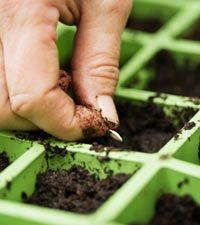
I don’t just put plants or seeds in the dirt, though. I see gardening as a co-creative process between Nature and me. The seeds with all their fiery potential meet the fire of the Sun, and between lies the sweet wind, sacred water, and my loving attendance. I have the plan, and She Who Makes Things Grow puts my plan into action. When I plant seeds, I first hold them in my palm and feel into them. I thank them for their contribution to the planet and my life, and I put them in the ground. I cover them with soil, water them lightly, and take a moment to pause. I call into my garden the energy of whatever plant these little babies will become. Obviously the plants will grow, and even thrive, without my doing this. I feel, though, that working with the energy of the plant as well as the physical process of gardening aligns me with the greater powers at work.

We are deeply tied to the “natural world;” we are in fact a part of it. In a world of cell phones, a thousand television channels, satellite radio and the World Wide Web, it can be all to easy to forget this. I remember this truth when I tend my garden. I am surrounded with the hummus scent of soil microbes and wakening grass. My fingernails and every crease in my hands are black with dirt. The surface of my skin cools against the spring winds, yet I peel off layers as the Colorado sun sinks through fleece and cotton. It is not uncommon at a mile high to garden in a tank top even in February or March. Of course a spring snow shower can come at any time….

On the sunny days, the fat radish seeds go into the earth, a promise of the crunch and bite to come. I sprinkle another bed with mesclun mix, and dream of early salads. On calm days I sometimes lug all my seedlings out into the bright sun, and do my best to remember to bring them in before dark. While the seeds and baby plants promise a bounty of freshness, I promise them life, a chance to contribute to the turning Wheel. My muscles, blood, and breath dance with these neophytes, bringing them into the turning of time – and bringing myself more fully into the Great Dance as well.

Gardening brings me into real space and time. The practice connects me with the earth, my neighbors, and the food economy. A friend recently asked me what I would grow if I could only grow one thing. What a preposterous question! Even if I lived in a high rise with a teeny balcony, I would grow herbs and salad out the back door, and more plants in a community plot. Growing my food is a response deep within me to my roots as a descendant of farmers, to my spirit that honors the sacred earth, and to my mind that eschews corporate agribusiness control over my dinner table. I feel in fact that I do not do enough.

When I talk to my seeds and to the plants as they grow, blooming, sprouting, reaching, dreaming, I thank them for their hard work converting sunlight to usable energy. I thank them for gracing my yard. I thank them for inspiring me to exercise daily with my shovel and garden gloves. Then I take a quiet moment to reflect on my place in the here-and-now. In this quiet, the garden speaks back to me. Through its vibrant greenness it tells me to breath, trust, know we are All One, not only on a virtual sphere, but right here in this moment of sunlight and breath and stone.

Want to grow a garden this spring? Plant early spring vegetables a few weeks before the last average frost. Include some of the following:
Arugula
Beets
Broccoli
Radishes
Salad greens
Kale
Dandelion greens
Chives
Green onions
Need space? Many cities have community garden organizations. Check out the American Community Garden Association’s website at www.communitygarden.org.

Tuesday, April 2, 2013

Gardening on a Budget

By Clea Danaan

65 million Americans garden, which adds up to a lot of money spent at garden centers each year. You can join the growing movement of home gardening without spending a lot of your own money by using the following tips:

- Grow from seed. A lot of vegetables and flowers are easy to grow from seed without any special equipment. Buy organic seed from a good source like Seeds of Change or Botanical Interests, participate in seed trades, or bum a few off a gardener friend. Germinate the seed by putting it between damp paper towels placed in a plastic bag in a warm spot like the top of the hot water heater. When the little root has popped out, carefully plant the seed in potting soil (compost mixed with peat moss works well) in a clean,  used yogurt tub that has holes poked in the bottom. Keep them moist but not soggy. Place them in a sunny window, or put them outside during the day and bring them in at night till night temperatures get warm enough (about 40 degrees for warm season plants; 50 degrees average for tomatoes and peppers) to plant outside in larger pots or a bed. I put my yogurt containers on a tray for easy transport in and out of the house, and I cover the trays with bird netting to discourage squirrels from digging in the dirt.

- Compost. This reduces waste, improves your garden soil, and saves money. Purchased compost is expensive and may not be weed free. A great way to get materials for your compost is to collect grass clippings, dropped fruit, and raked leaves from your neighbors. Last year we got bushels of wormy apples from a neighbor, and we have fabulous compost this spring.

- Propagate from other plants. Buy some rooting hormone, which is about $5 for a nice sized bottle. To make more perennials, ground cover, or shrubs from ones you already have and like, or from ones your friends and neighbors have grown, cut a bit of a branch off and dip it into the rooting hormone. Push this branch into potting soil, water, and cover with a plastic bag till you see new growth. Then plant in the ground in a hole amended with compost. Many perennials (flowers that come back year after year) can also be divided, which involved digging them up, breaking them into smaller clumps, and replanting. Water well and feed with compost for best results.

- Take advantage of your city’s offerings. My city offers free mulch to residents. You bring a truck to their mulch dump site and they fill the back of the truck with wood chips. The mulch is not the pretty bark chips you buy at a garden center, but it works great as a covering for garden beds and around trees. It conserves water, and as it breaks down it improves soil fertility. Your city may offer compost, mulch, and even trees for free or cheap. See if your city has a website with more information.

- Look for deals on Craigslist or Freecycle. I’ve seen free river rock, free horse manure, and cheap tools of all kinds listed on this great site. Even plants!

- Water by hand. Overhead sprinkler watering is a huge waste of water, and therefore money, not to mention a sacred resource. Use a watering head on your hose the turns off, or water with a bucket and a smaller container like a soup ladle. Or better yet, install a timed drip system. Over time it will pay for itself in saved water.

- Collect gray water. Put a bucket in your shower and another under your eaves to collect water, then use this water on your grass or flowers. A rain barrel can also be used to collect rain water, and this water used to water your veggies. If you have a plastic rain barrel, store it out of the sun to reduce plastic particles in the water. Cover it with screen to keep out bugs (especially mosquitoes) and empty often.

- Lean on community. You don't have to grow it all in your yard. Last year a friend posted on Facebook that he knew of a cherry tree loaded with fruit that the owners were offering to anyone who wanted to come harvest. Then in the fall we went as a homeschool group to a local farm and paid just a few dollars per person to pick bags and bags of produce. We had over 170 pounds of produce for only $10! What would your neighbors or friends like to grow? What do they have extra that they can trade?

- Look first at the markdown shelf. The scraggly, overgrown plants that don't look pretty anymore are moved to a mark down shelf at most gardening centers. With a little love you can nurse them back to help easily for a fraction of the cost.

Gardening doesn't have to break the bank. In what ways have you shared money in the garden?

Tuesday, January 22, 2013

Bee Houses for Attracting Beneficial Bees

While it's likely we will get more snow here in eastern Colorado, it's unseasonably warm with no hard freezes in the forecast. With the quickly accelerating warming trend we've seen the last few years, we may not get really cold again. But still I know it isn't yet time to plant cool season seeds. I did put out some radishes and orach, but will try to wait on peas and other greens. It really is too early.

But today it is near 60, and a honey bee was very interested in the compost pile. Poor thing is thirsty and hungry, and not a flower in sight. So in honor of the season's first bee, I put out our bee houses.

We have two. A bumble bee house:


It has two chambers, one for workers and one for the queen. The lid lifts off, and there is a piece of plexiglass for viewing the bees. I put it back by the fruit trees, which are some of the first to bloom when real spring hits.

And our mason bee house:

I hung it on the side of our patio, so it has a south-facing exposure. I made sure it was far enough from the bumble bee house, since the bumble bees can be territorial. They will lay eggs in fall, and next spring they will emerge.

Here is some more information on attracting beneficial bees to your yard.

Saturday, December 15, 2012

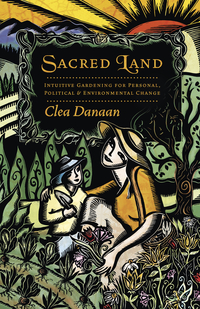
Discussion Questions for Clea Danaan's Sacred Land

"In this positive and practical handbook, Danaan shows how organic gardening can germinate environmental awareness and political change while feeding your spirit. You'll learn how to plan and plant your garden, create compost, save seeds, conserve and transmute water, connect with garden goddesses, and incorporate planetary energy in your garden." - From Llewellyn.com


Thinking of studying Sacred Land in a group? Or delving more deeply into your own intuitive organic gardening practices? Here are a few study and discussion questions to help you get started.


Discussion Questions for Sacred Land

Earth

  1. What messages, sensations, and images do you receive when you "tune in" to the soil? Is doing a practice like this strange to you? What fears or concerns do you have about "talking" to dirt? 
  2. What shifts for you when you consider a garden a co-creation with nature? What ideas germinate when you enter into such a relationship with the land?
  3. Many people first notice nature spirits or the energy of the land through trees. What sacred experiences with trees have you had?
  4. What can you do to increase the local and organic food you eat? As a group or a family, take it on as a project. If you already eat mostly organic and local, how can you help others do the same?

Air

  1. Discuss your intentions for your home, garden, and community. How can you call on the power of air to bring these ideas into the world?
  2. Do you fear insects? Why? Take some time to get to know them better. What teachings have bees, dragonflies, and even mosquitoes taught you?
  3. What birds show up in your life regularly? Have they a message?

Fire

  1. Everything we see, eat, touch, and hear exists because of the sun. What happens when you meditate on this idea for a few moments?
  2. The fire goddess Chantico teaches us about pleasure and pain. When have you felt this keen edge? What has it taught you about life?
  3. What does it mean to you to reclaim your passion? How can you begin to do this?


Water

  1. We are emotional beings of water. As you read this chapter, what do you notice about your awareness of and relationship with water in your daily life?
  2. If you are working with a group, practice transmutation (p 208).
  3. What is your work as a sacred sister?

You will find more discussion questions at the end of Sacred Land, on page 229. 

Sunday, August 5, 2012

Gardening: The Gateway Passtime

As I poached gathered-this-morning eggs, I thought, Wow... we raise chickens, garden, homeschool, and now we have solar panels on the roof. We've truly become one of THOSE families. I had to laugh.

So a warning before you tuck a zucchini seed into the ground for the very first time: gardening will take over your life. Soon you'll be stealing your neighbor's bags of grass clippings and raked leaves. You'll be carefully tucking away cat hair and dryer lint, all in the name of healthy humus. You might have a bin of worms hidden under the kitchen table. Your kitchen window will boast drying peach pits and pumpkin seeds.

And then... you'll think, I need manure. And wouldn't fresh eggs be great? They're so pricey at the store. So you get some chicks. Who grow up to be chickens. Who poop manure.

You've become accustomed to saving all your kale stems (for compost and chicken feed), bean-cooking water (to pour on plants), the entire neighborhood's fallen branches (for shredding into mulch), and yogurt cups (for seed starting in the spring), and you think - look at all that RESOURCE pouring down on my head that I'm not using! What a waste! So you get solar panels and a rain barrel, harvesting and directing free gifts from above.

And then, well, you're home with your garden and hens and practically free electricity, and you think, why send kids away to school where they have to eat reheated frozen food and read about growing seeds in little easy readers? So you take the plunge and keep them home. You've become a homeschooling family. Munching on carrots fresh from the garden and carting around a plucky black-and-white hen.

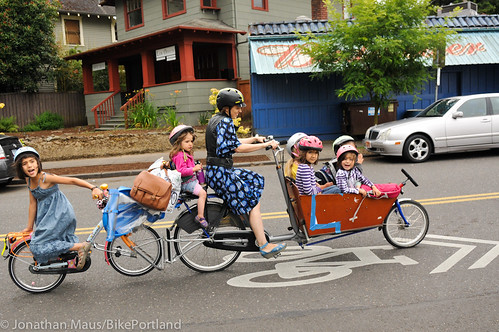
Maybe next it's time to ditch the car.


http://bikeportland.org/2012/06/28/with-six-kids-and-no-car-this-mom-does-it-all-by-bike-73731  


Now you've seriously become one of THOSE families.

All because you pressed one little seed into dirt and watered it.

Don't say I didn't warn you.


Please visit one of my sponsors
Bentley Seeds Inc.

Tuesday, January 10, 2012

Seed Packet Wedding Favors

Cathedral Bells


Planning a spring or flower-themed wedding? Consider giving seed packets as wedding favors. One of my favorite seed companies, John Scheepers Kitchen Garden Seeds will give you 10% off 10 to 49 seed packets of any one variety, or 25% off 50 or more of the same variety. Need some ideas? What about Lemon Balm, a perennial herb that brings love, success and healing and makes a nerve-tonic tea? Or rosemary, bestowing love, protection, and healing? In the flower department, how about Forget-me-nots or Cathedral Bells? For a fall themed wedding, give your guests pumpkin seeds (John Scheepers offers ten varieties) - just remind them to not plant until the following spring.


For more nature-themed wedding ideas, see my ebook, Magical Bride: Craft an Interfaith Wedding for a Goddess, available now in all e-reader formats.

Wednesday, April 20, 2011

Planting Nettles in the Witches Garden

The title of this post feels like it might be a metaphor. But it's not. Yesterday, damp and cool, saw me duck down behind our wild roses, pull away the leaf litter, and plant stinging nettle seeds. They don't grow wild here like they do where I grew up, and it wasn't until I had moved away from the Pacific Northwest that I learned of their infinite value. I couldn't figure out where I would plant them in a suburban yard with two kids and their friends running about. When I discovered the seeds for sale through Seeds of Change, I bought some. When they arrived the spot occurred to me - behind the rose bushes, to the side of the garage. It stays slightly damp there. When it rains the hole in the garage gutter drools on that spot. It's shady. And out of the way. If we ever sell the house I'll have to rip them out no doubt, but for now I have my little witch garden - thorny wild roses and a tangle of stinging nettle.

Monday, February 21, 2011

Rock Gardening in the February Sun

February weather always teases me into feeling that real spring is just around the bend. After ten years in Colorado I know the warm weather and sweet air do not mean the end of freezing night temperatures nor do they mean the snow has all passed. We will get another snowstorm, probably a big one. But for now, with snowdrops and violets peeking through the mulch, temperatures kissing fifty, and finches and juncos singing about love, I need to get out into the garden. Since I cannot plant anything and I'm not doing any winter sowing this year, I've been moving rocks.

Our house was built in 1950, and sometime in the last sixty years someone moved a whole lot of rocks into our yard. I keep uncovering them, most about the size of two fists nestled together. Some are larger, requiring my rusty red wheelbarrow to move. Every year I shift them about, front yard to back, side to side, circling beds or marking paths. One year I made a spiral of rocks, but I kept tripping over them on the way to the garden. An apple tree is planted in that spot now. Some years I line them up as borders, other years I scatter them for a more natural look.

This year I have an idea to turn a strip along the south-facing fence, which has never grown vegetables or anything but weeds very well, into a rock garden. I'm on the hunt for a dwarf pine tree or two, and I picture these resiny evergreens surrounded by a natural scattering of rocks nestled with thymes, pasqueflower, and heuchera or something little and white and dainty. I stare at the garden for ten minutes until one row of rocks looks all wrong and I rip it out. Another row seems to cut off the flow of a pathway, so that comes out. Then the pathway, flagstone also uncovered near the front door shortly after we moved in and promptly moved into the back garden, also looks all wrong. I feel the need to pull it all out and do it the right way, raking the soil flat, putting down sand, reconstructing the mosaic stone path, and tucking in dwarf thyme into the cracks.

This is the perfect time of year for this garden task, as I can see the shape of the yard without greenery. It's all bones and brown grass. Rock bones, not animal bones. Bones of the earth. As I haul and dream I feel connected to the builders of Stonehenge and artists like Andy Goldsworthy who crafts outdoor sculptures out of natural objects. I aspire to craft a garden of art, though mostly it's more like a pile of rocks here and a smattering there. I recall how Rebecca Dye, landscape architect, listens to the rocks she places in gardens. They tell her where they want to go and with which other rocks they want to sit (I wrote about Rebecca in Sacred Land). I try to listen to the rocks. The result is more alive than a random placing, if no Andy Goldsworthy.

I feel more alive, too, carrying rocks about the yard, dreaming of spring and feeling my own roots stretch into the cool dark earth. My work becomes a conversation between my hands and heart, the land, the stones, and the spring-like day. Spring planting may be a while off yet, but by playing with rocks I get to stretch my gardening fingers and am happy.

Thursday, December 30, 2010

Urban Farmer Seeds

I just discovered a cool idea: Urban Farmer Seeds (ufseeds.com)  "uses recycled magazines to package all of it's seeds.  Our eco-friendly seed packets are made using old magazines and catalogs that would otherwise go to a landfill.  We separate these catalogs by paper strength and size and then turn them into seed packets for our seeds!" They sell organic and heirloom seed packs and gardening products geared towards a small carbon footprint at reasonable prices. If you sign up for their newsletter you get a $5 off coupon of a $25 purchase that is good 24 hours from entering your email. Nice work!

Saturday, July 17, 2010

Gender and My Book Sacred Land: The Evolution of a Spiritual Gardening Book.


One review of my gardening book Sacred Land says some lovely things about the book, and then points out:
One flaw is that it is geared solely for women. Men can read it, but the language and imagery used is exclusive to women, no gods of harvest are mentioned, nor sun gods nurturing the land. Even so, men should read it for the tips – even if the meditations won’t always suit.
I wanted to respond to that here, as it is a complaint that comes up every once in a while. I even got an angry email from a reader about the issue! So maybe this blog will help explain.

When I originally wrote the book, it was intended as part of a series of books called the Goddess Guides. The first was called Goddess' Guide for the Magical Bride and became my book Magical Bride. The second was about healing, and I haven't written it yet. The third became Sacred Land. If you have read both Sacred Land and Magical Bride, you will know that I profile goddesses related to pertinent topics in each book. The series was meant to be geared towards women, on normal topics we deal with every day like marriage, gardening, raising children, and health. I wanted to include goddesses and women who inspire me on each given topic.

So at first, Sacred Land was titled Goddess' Guide for the Sacred Garden. Then it changed to Sisterhood of the Sacred Garden. My publisher felt this title was too... sisterhoody. It didn't work for them. So they took the title and subtitle out of the text, and the woman-goddess focus got lost in the new title. At that point I should have edited the heck out of the book to include gods and men, but I didn't. Not because I don't love gardening gods and men, but just because I didn't. First book and all that jazz.

So dear men and others wondering about the gender imbalance in the book, fear not. I mean no disrespect. I mean it as empowering to women - and to gardeners of both genders everywhere. And now you know something about the evolution of a first book!

Sunday, April 25, 2010

The Magical Qualities of Plants

All plants have certain qualities, their own magic or medicine. Often you can learn these qualities from herbal and gardening encyclopedias, but sometimes you either can’t find a given plant or don’t know what kind of plant it is. Fortunately, observation and direct communication can teach you about a plant’s magic.

First look at a plant’s form: What is its shape? Size? Color? In biology, form follows function; in magic, function follows form. What does the shape of the leaves, roots, seeds, or flowers remind you of? To take an obvious example, look at a cactus. Cactus medicine is protection (and chastity!) which is manifested in its thorns. Roses look like the luscious folds of a yoni, and they bring fertility, lust, and love. Kidney beans look just like kidneys, and they help nourish those organs.

Next look at the plant’s location. Does it grow in a ditch, in a desert, atop a cliff? A plant will lend you the properties it has had to cultivate to survive, and this too is part of its magic. For example, cattail grows in wetland areas. It is able to withstand soggy roots without rotting. It has fire energy, and offers strength in adversity.

You can also learn about a plant by communicating directly with it. Find a spot where you will not be interrupted, near a plant you want to know more about. Focus first on the energy inside your own body. You may want to start by feeling the inside of one small part, like your hands. Feel the tingling sensation or whatever you feel inside that part of your body, or the whole body if you can. Next, become aware of the earth beneath you. When you feel connected with your body and connected with the earth, you are centered and grounded.

Continue to feel the energy inside you, but bring you awareness also to the energy around you, in your energy field. Sit with this space for a few moments. Gradually expand your awareness around you, until you meet the plant’s energy. Ask the plant if you might connect with it. You will get an answer as a hunch or a sense. If that plant doesn’t feel like connecting, choose another plant until you find one that does. Most likely the plant will be thrilled that you want to communicate with it. With respect and thankfulness, expand the area of your energy to include the plant. What does this plant feel like? What do you notice? What does it have to share with you, to show you?

When you are finished, pull your awareness back into your immediate body. Take some deep breaths. Record what you discovered. Using plants magically and communicating with them may be new to you, but if you are curious to learn more, just stick with these practices and see what happens.