Showing posts with label nature. Show all posts

Thursday, April 9, 2020

She Thought He was the Gardener

According to John 20, Mary Magdalene didn't recognize Jesus when she first saw him return to his empty tomb. She mistook him for the gardener. Why did he look different? Much of this story is metaphor, but not all. We are left over 2000 years later to figure out what is most likely historical and what is a metaphor. Both interpretations teach us about the nature of reality and also of Christ.

I am sitting with two questions about this story. Why a gardener? In Hebrew it means the same thing it does today. And why do we not hear of Him related to as the Gardener more? Potter, carpenter, bridegroom, shepherd. But not gardener! Yet this is in many ways what He is: One who tends His world. Who follows the seasons of death, Resurrection, and New Life. Of Hope and Faith and Promise. That's what we gardeners do. One can be all those things, but I think the gardener aspect is intriguing and powerful, especially at Easter.

My other question is why did Mary not recognize him? Why -- when He had the power to look like or be literally anything, was he unrecognizable? What had he been up to in the time he cast off his shroud and the napkin on his face? Did he watch the sunrise and take in his own Body of Light? What was he thinking?

So then she "turns around" twice. Is this literal, as anyone would when her best friend has just been brutally murdered and then his tomb is empty? Or is this more like a "turning around" that is happening in her mind, like shifting her thinking, as in, woah, all these things he's been telling me are real, and he has triumphed over death? In some way it helps to prepare her for His speaking to her.

So he calls out her name, "Mary!" and then she knows it is He. What was his tone? Loving? A whisper of hope and wonder? Exasperation because she could not see it was he? But then he apparently didn't look like Himself. Then he says don't touch me. She wanted to hug him, no doubt. Did he say this because his new Light Body was too "hot" to touch? Too incorporeal? Or some other reason? I suppose because she can't touch him. He's between the worlds. And yet he does very physical if miraculous things over the next few days, breaking bread with his frightened disciples and filling their fishing nets with a huge catch.

It's a powerful few days in the history of the planet. Over 2000 years later, we are still called to Rise and share the Light with others. In my theology this has nothing to do with "saving" someone from sin, but from guiding our souls into the Darkness of transmutation and into the Light of Awakening. We can be pulled from the sludge of our own internal Hells. Perhaps there is a Gardener in you that is as yet unrecognizable. What parts of you are you watering, germinating, and dreaming about?

Saturday, November 30, 2019

November 30 - Grounding


In Living Earth Devotional I discuss grounding by imagining your body's energetic roots growing deep int the earth. I am leading a Bible study at The Land, an ecumenical Christian faith community in Aurora, Colorado. This is leading me to look up Bible verses, something that hasn't been a huge part of my faith until now. I'm actually loving seeing how Bible scripture supports my mystical, liberal, deeply ecumenical spirituality. It's beautiful to read the Bible from a Christ Consciousness perspective. So let's see what the Good Book has to say about roots and grounding.

Ephesians 3:17
so that Christ may dwell in your hearts through faith. And I pray that you, being rooted and established in love...

"Christ" to me is Christ Consciousness or the Cosmic Christ, which can be found in all of us, and is awaking in all of us. And the nature of Christ Consciousness and the Universe is Love. So this passage speaks about how being grounded, or putting your roots deep into the Earth, is about reaching ourselves into Love. We are established on Earth through Love. 
 
                                  ~~~
Colossians 2:6-7  Therefore, just as you have received Christ Jesus as Lord, continue to walk in Him, rooted and built up in Him, established in the faith as you were taught, and overflowing with thankfulness. 

When we are rooted in the blessings of this life, and in the bigger picture of Christ, we overflow with gratitude. 


                                  ~~~~
Matthew 15:3 But He answered and said, "Every plant which My heavenly Father did not plant shall be uprooted."

Jesus speaks in parables about the Earth a lot. This passage is usually interpreted as people who aren't good Christians will... I'm not sure - go to "hell"? I don't see it this way, for God planted us all, and planted all the plants, "planted" everything. So what is Jesus saying here? I think he is saying that the darkness that we carry within, the belief that we are no good or that we are not loved (what hell truly is) - those beliefs were not planted by God, and those will eventually perish when we come to know that we are also Christed ones. 


Blessed be!

Monday, June 1, 2015

Screen Time and Nature Play: Both Together Will Save the World


You have no doubt read that kids these days spend too much time on screens, and too little time outdoors. Articles and books arguing the evils of screen time quote studies linking screen time to obesity and diabetes as well as depression and lack of vitamin D (which can lead to cancer).

Then there are the equally compelling articles and blogs that posit that playing computer games is actually really good for our children. They learn hand-eye coordination, three-dimensional design, problem solving, and even social skills. They are exposed to math concepts, story arcs, and consequences. 

Which perspective is to be believed? I think it's both. Kids benefit greatly from screen time, and they need to also spend lots of quality time in nature. 

I suspect that the problems of screen time arise not from the computer or TV itself, but from circumstances outside the screen bubble, like poor nutrition and lack of attention from caregivers. I also sense that the debate - too much screen time? too little nature time? too much testing? - about what kids should really be doing with their time has more to do with our adult compulsion to control things than about kids themselves. The fact is, we cannot control the future. Sure, we can give our kids good nutrition, and that will give them a huge leg up in future health. We can make sure they learn to read, speak clearly and assertively, and perform math skills so that they can  follow whatever field they wish. But we don't know what jobs will exist in the future. We don't know what discoveries and experiences they will have that will lead them into a certain field. We also don't know what the changing planet will mean for them, although we have some ideas.

Climate change is here, as evidenced by crazy weather, acidifying seas, and melting ice caps. Because we refuse to turn off the CO2 machine, it's only going to get worse (and in fact, even turning off the machine wouldn't help for 100s of years, as we've already crossed the threshold of CO2 levels in the atmosphere). This is one reason why it is imperative that kids get to know the natural world. "If sustainability depends on transforming the human relationship with nature, the present day gap between kids and nature emerges as one of the greatest and most overlooked crises of our time, threatening people and countless other species. Helping children fall in love with nature deserves to be a top national priority, on par with reducing greenhouse gas emissions and preserving species and wild places," writes Scott Sampson in How to Raise a Wild Child: The Art and Science of Falling in Love with Nature. 

But, consider the skills a child learns while exploring biomes in Minecraft, building houses and fighting zombies. She learns, in short, to craft and defend a world. She learns to keep trying when she is doomed. She learns to ask questions about how to solve problems, and learns how to find answers to those questions. These skills will help our children save our warming planet or learn to adapt to it just as much as a love of nature will. 

So I encourage parents, educators, and policy makers to stop arguing about the evils of screen time and whining about how little time kids get outside, and seek a powerful balance. Take kids outside. Let them use the same skills they so love in video games as they explore, question, and discover. Give them time to fall in love with nature. Then encourage them to do the same on a computer. What they create will go beyond anything we as adults could try to craft or force through their carefully controlled educations.

I believe it will be young people who love nature and are really skilled at well-created video games who will create technologies, policies, and plans that will bring our species into the next phase of human life on Earth, one that responds to the changing planet in a positive way. We can support them in this by bringing them outside and supporting their love of technology. It isn't an either/or situation, it's both-and. Nature and technology, engineering and love.


~~~~~~~~~~~~~~~~~~~~~~~~~


For more ideas on natural parenting, 
check out my book! 

Thursday, June 26, 2014

Sitting Dragonfly Vigil

Yesterday I stepped out back to pick a green onion for my breakfast, and discovered a dead dragonfly on the patio. I knelt down to pick him up and he began whirring his wings; he wasn't dead, just dying. I shooed the cat away and brought the beautiful blue and black creature into the house. I gave him a drop of water, which made his wings beat and his legs move. Clearly he couldn't fly anymore. I couldn't think of how to help him, and recalled that dragonflies don't live very long in their adult form. I could, however, make him safe from cats and other predators and give him a place of honor on my kitchen counter, holding the space for him as he passed into Light.

His eyes were like geometric blue opals. They had a depth to them, like a glass gem or a bead of water. My four-year-old remarked that the dragonfly's patterns on his body reminded him of a totem pole. I covered him with a bug-box lid so the cat wouldn't get him but he could breathe, and we left for our trip to the science museum.

When we returned, I thought he had passed, but when I touched him one leg moved. His opalescent eyes had turned a dull black from the top down, with just a crescent of blue at the bottom. I gave him Reiki, hoping it would ease his transition. While he was "just" a bug, he was fierce and beautiful, and I at least wanted to honor his slow death.

When he died, his eyes were completely black. You could literally see the life force leave him through his eyes.

I set him on my altar. Dragonfly is about illusion, and I am writing a book about Zen right now, which is all about the illusions we carry in our heads about life, about each and every thing we encounter. The problem is not that we live in illusion, it is that we think the illusion is "real." Dragonfly teaches us to hold the dichotomy of illusion and what we call reality. He teaches us about the illusion of life and death, and the dichotomy of death being real and final, and not.

I give thanks to the Universe for gifting me this honor of holding vigil while a beautiful Blue Eyed Darner. Aho.


~~~~~~~~~~~~~~~~~~~~~~~~~


For more ways to live in harmony with the living earth,
check out my book Living Earth Devotional by Clea Danaan

Monday, March 24, 2014

The Simple Life

Sustainable Living

Here's a great resource for spring:

The Simple Life Forum at Daedalus Books

Ideas to Nourish & Sustain
Growing Your Own, Preserving Your Own

"In its broadest sense, the idea of sustainability covers a lot of ground, from growing our own produce in a kitchen garden to finding responsible land and water management practices that we can sustain far into the future. Sustainability and preservation are also at the heart of what we do at Daedalus Books, which was founded to find a second life for remainders—good books that might otherwise be destroyed simply because publishers can't afford to keep them in stock."

Submit your favorite farmers' market via email on their site!


The Way of the Hen: Zen and the Art of Raising Chickens


Daedalus is featuring, among other fabulous books for living simply, my own book, The Way of the Hen. It's only $3.98 right now! Perfect gift for anyone who loves chickens.


Wednesday, February 12, 2014

The Power of Image in Knowing the Self

Last year my adrenals crashed - panic attacks, hypoglycemia, heart palpitations, and extreme
sensitivity to dairy and gluten. I've been getting care from my doctor, chiropractor, and acupuncturist, all of which has really helped. I've been clear, though, that underlying the physical aspects of this healing has been spiritual rebirth. That work I have had to do myself.

When I was really sick, phases of my life would come up in dreams, images, and synchronicities. They began with my youngest days and moved forward in time. This wasn't something I consciously called in; it just happened. I cleared emotional stuckness from each of these periods by feeling old emotions, crying, and letting go. I did a lot of forgiving things I hadn't realized I was even holding onto. Carolyn Myss talks about the power of forgiveness in healing in her book Defy Gravity. I recommend it to anyone dealing with healing. I also gained insights into these periods of time from my perch in the present. Reframing also helps me release and evolve.

Then recently, after being carried into the present in this life review, two images came to me. One is a photo of myself at age two or so. It's black and white, and it's a close up of my face. I had it on my mirror when I was in high school. I love it because it is a picture of Me. You can see my soul in my eyes. They are centered, relaxed, and wise. When I feel disconnected from myself, I recall this image (I don't have a copy of the picture but remember it clearly). I instantly settle into my body and my soul. I re-inhabit myself, no longer pulled in the directions my ego thinks I should be to make everyone else happy. Which is purely illusion, based on old fears. I am ready to let these illusions go. I need this image to help me do so.

The second image actually came from reading a young adult novel called Seaglass Summer by Anjali Banerjee. In this book a girl stays for a month with her veterinarian uncle on an island in Puget Sound. When I was nine, that's what I wanted to be, a vet on an island in Puget Sound. I enjoyed the book, but also what came out of it had more to do with my soul journey. The image that arose was me as a young girl peering into tide pools. Not a memory, but more a sense of my soul, sort of the me that might have been. The me that is inside, unbound by the limitations of real life. Don't get me wrong - my childhood was actually spent peering in tide pools. And it really wasn't horrid. But we all have limitations from the outside, and from the ways our egos interpret these limitations. As we grow older, part of healing and becoming whole is to see who we really are underneath the surface, and work to live that authenticity. That image of soul-child-me playing at the beach, my hair whipping around my face, barefoot, smiling and unrestricted - that is part of my authenticity. My Real Self.

Holding both of these images in my heart helps bring me back to myself. What images have come to you in dreams, while reading, or in old photographs of yourself that remind you of your connection to Spirit, Earth, and Authentic Self? Or perhaps for you it is a song, a phrase, or even a movement? What path returns you to You?


Sunday, February 9, 2014

A Gardener's Alphabet


What a gorgeous, simple, and life-affirming book! Highly recommended.

A Gardener's Alphabet by Mary Azarian (Houghton Mifflin, 2000)


Sunday, October 20, 2013

A Gift from my Father: Connecting Beyond the Veil

By Clea Danaan

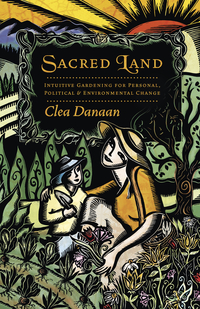
Just before my dad died, I attended a metaphysical fair to promote my first book, Sacred Land. The two cases of books the event planner had ordered didn't arrive on time, even though other cases of books from the same publisher had arrived with no delay. I had about three copies to sign and promote.

At the fair I met a psychic healer who really knew her stuff. She really liked my book, and I wondered out loud why my cases of books hadn't arrived. She squinted her eyes in that inner seeing kind of way, and said, "Who stands behind you on the earth plane?" I didn't know what she meant. She said, "Your dad." In the middle of five hundred people milling about, I started crying. I didn't even know why. She told me that my dad was jealous of my publishing a book, and that he had held up the delivery. Obviously this wasn't conscious or literal, but that his energy - and I assume my own unconscious and energetic reaction to it - delayed the book delivery. She did some distance healing work on me and my dad. She said, "Now things will be different with Dad."

A few days later, I spoke with him on the phone (he and I lived in different cities), and we had the most amazing conversation. He asked me about my book, which he had never done before. He was interested and excited. Before, it was like he didn't know it existed. He hadn't known I was in grad school, even though I told him, and he hadn't asked anything about the book. It made sense to me that he was envious. He had never finished his master's degree in ministerial studies, and he had attempted many times to write a book. Also in this phone conversation, he asked for my help with his health. In the past, he had shrugged off any suggestions I offered (I was a massage therapist at the time, with backgrounds in expressive arts therapies and acupuncture) about health, mostly due to his shame about his weight and smoking. I did some online research, and we set up an appointment for him to see a naturopath. His doctor had been no help, telling him he just needed to lose weight. I knew more was going on, but not what it was, and that he needed someone to help him.

My dad and I have always been two peas in a pod. We are deeply into nature, and dedicated to our spirituality. We are writers. He liked to tell stories, like the time we went to look for concretions, rock-like formations of clay found in certain rivers and creeks. He used to go hunt them with his dad, and as we hunted he shared with me stories of concretion hunting and fishing with his own departed father. We found several concretions that day, and kept them in the windowsill at home. I would pick them up and inspect them, thinking of his father and our time at the creek.

The morning of his appointment with the naturopath, he passed away. I had felt it coming, and was stunned but not surprised. The coroner said congestive heart failure.

A few days later I talked with the psychic from the metaphysical fair and told her that Dad had died. She said he would now sleep for a year, as his soul felt defeated and he needed time to just float. That made sense to me.

A year later, I received in the mail a package from my brother-in-law. It was heavy. This brother-in-law and I are not close, though friendly at family get togethers. He's never mailed me anything. We don't exchange emails. I opened the package with great curiosity. Inside was a note that he had read Sacred Land and really enjoyed it. He said he thought I'd appreciate these concretions he'd gathered, which could only be found in certain creeks and rivers. He'd been collecting them for years, and something told him I'd appreciate them.

They were, I knew, a gift not just from my brother-in-law, but also from my dad. It was his way of letting me know he was awake again, and that he supports and is proud of my book and my work. He was letting me know we are connected always, through all sorts of ways, past, present, and future.

Concretions in a basket of crab apple suckers and flicker feathers

Tuesday, April 16, 2013

Talk to Your Plants: Spring Musings on the Garden


I came across this article written in 2010 and somehow never published (it was in my Draft folder!). Though today is cold and snowy, the essay is still timely. --Clea

~~~~~~
I love all the seasons for their unique gifts and beauty, but I get sort of manic in the spring. The snow has melted, the nights grow warmer, and the seeds I ordered in January have all arrived. It is time to put my plans and ideas into action. I get to put the first spring seeds and seedlings in the ground: radishes, kale, Brussels Sprouts, lettuces…

I don’t just put plants or seeds in the dirt, though. I see gardening as a co-creative process between Nature and me. The seeds with all their fiery potential meet the fire of the Sun, and between lies the sweet wind, sacred water, and my loving attendance. I have the plan, and She Who Makes Things Grow puts my plan into action. When I plant seeds, I first hold them in my palm and feel into them. I thank them for their contribution to the planet and my life, and I put them in the ground. I cover them with soil, water them lightly, and take a moment to pause. I call into my garden the energy of whatever plant these little babies will become. Obviously the plants will grow, and even thrive, without my doing this. I feel, though, that working with the energy of the plant as well as the physical process of gardening aligns me with the greater powers at work.

We are deeply tied to the “natural world;” we are in fact a part of it. In a world of cell phones, a thousand television channels, satellite radio and the World Wide Web, it can be all to easy to forget this. I remember this truth when I tend my garden. I am surrounded with the hummus scent of soil microbes and wakening grass. My fingernails and every crease in my hands are black with dirt. The surface of my skin cools against the spring winds, yet I peel off layers as the Colorado sun sinks through fleece and cotton. It is not uncommon at a mile high to garden in a tank top even in February or March. Of course a spring snow shower can come at any time….

On the sunny days, the fat radish seeds go into the earth, a promise of the crunch and bite to come. I sprinkle another bed with mesclun mix, and dream of early salads. On calm days I sometimes lug all my seedlings out into the bright sun, and do my best to remember to bring them in before dark. While the seeds and baby plants promise a bounty of freshness, I promise them life, a chance to contribute to the turning Wheel. My muscles, blood, and breath dance with these neophytes, bringing them into the turning of time – and bringing myself more fully into the Great Dance as well.

Gardening brings me into real space and time. The practice connects me with the earth, my neighbors, and the food economy. A friend recently asked me what I would grow if I could only grow one thing. What a preposterous question! Even if I lived in a high rise with a teeny balcony, I would grow herbs and salad out the back door, and more plants in a community plot. Growing my food is a response deep within me to my roots as a descendant of farmers, to my spirit that honors the sacred earth, and to my mind that eschews corporate agribusiness control over my dinner table. I feel in fact that I do not do enough.

When I talk to my seeds and to the plants as they grow, blooming, sprouting, reaching, dreaming, I thank them for their hard work converting sunlight to usable energy. I thank them for gracing my yard. I thank them for inspiring me to exercise daily with my shovel and garden gloves. Then I take a quiet moment to reflect on my place in the here-and-now. In this quiet, the garden speaks back to me. Through its vibrant greenness it tells me to breath, trust, know we are All One, not only on a virtual sphere, but right here in this moment of sunlight and breath and stone.

Want to grow a garden this spring? Plant early spring vegetables a few weeks before the last average frost. Include some of the following:
Arugula
Beets
Broccoli
Radishes
Salad greens
Kale
Dandelion greens
Chives
Green onions
Need space? Many cities have community garden organizations. Check out the American Community Garden Association’s website at www.communitygarden.org.

Nature Mysticism in Children's Books


I'll update this blog post as I come across more books that express nature mysticism or a sacred connection with nature in children's books. Bonus points for beautiful illustrations!

If you have any suggestions, please let me know in the comments!


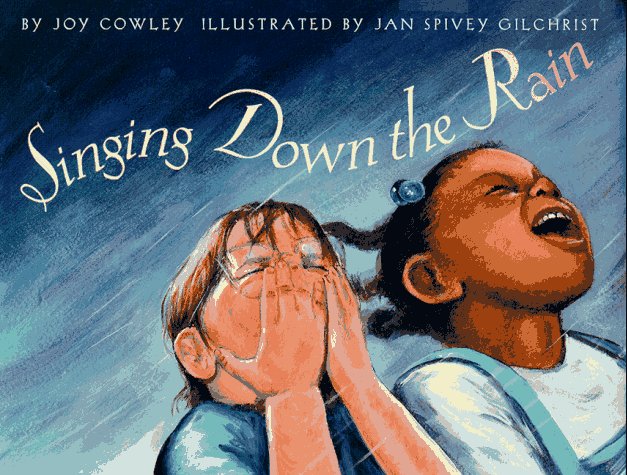
Singing Down the Rain by Joy Coley


Step into a small town where all the children are friends, but a brought has made the adults so grumpy they can't stop arguing! Only a miracle can heal this divided town. People are so hopeless, they almost don't recognise that that miracle when it appears as a women who specialises in rainsongs, Yet slowly the townspeople realise that with this faith they can sustain each other during the dry times, and then sing down the rain together.


Under the Lemon Moon by Edith Hope Fine

One night Rosalinda is awakened by a noise in the family’s garden. She is astonished to see a man creeping away with a sack of fruit from her beloved lemon tree. Rosalinda seeks out La Anciana for advice. The wise old woman offers an inventive way to help the tree and the man driven to steal her lemons. Set in the Mexican countryside, this charming story explores how it feels to get gifts — and to give them. 


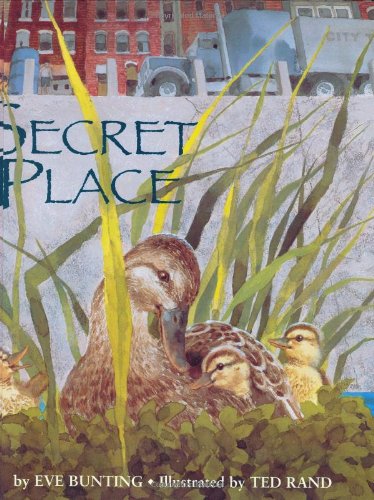
 The Secret Place  by Eve Bunting

A small boy finds a secret place in the city that he shares with a white egret, mallards, and even ducklings. A book about finding nature in the heart of the grunginess of the city, and a child's connection with that sacred discovery.


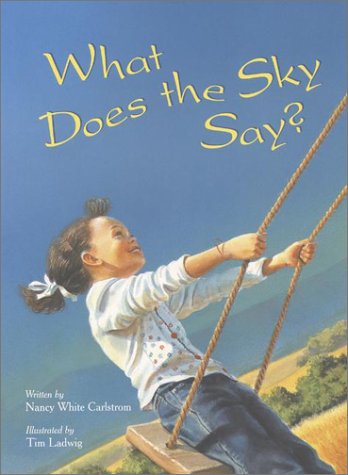
What Does the Sky Say?  by Nancy White Calstrom

"What does the sky say?" a child asks. What does it say on a winter day, or on a Saturday night, or when the rain beats on its chest, or its mouth is full of moon? A child watches the sky in changing seasons and in all kinds of weather and learns to listen to its voice. In "What Does the Sky Say?", author Nancy White Carlstrom's imaginative and poetic text encourages all readers, both very young and older, to wake up to and participate in the opportunities for joy and learning each day offers. And Tim Ladwig's extraordinary illustrations perfectly capture the moods of weather and season, the magic of childhood, and our deep connection to all creation and its Creator.


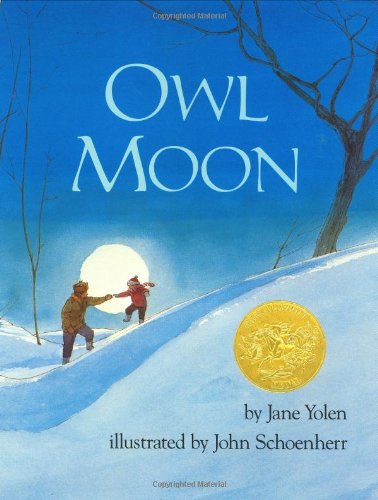
Owl Moon by Jane Yolen

"As expansive as the broad sweep of the great owl's wings and as close and comforting as a small hand held on a wintry night . . . The visual images have a sense of depth and seem to invite readers into this special nighttime world."--School Library Journal, starred review. Full color. 1988 Caldecott Medal Book.


Saturday, March 23, 2013

Trusting in Divine Timing and Guidance


"Consider the lilies of the field, they toil not, neither do they spin." Matthew 6:28


This passage in the Bible is often taken to mean that we should not worry about where our meals will come from and how we will earn our money. The Creator will provide. Birds and flowers don't hoard, nor do they stress about clothing, for all unfolds in its own time.

As I contemplated what I was supposed to DO next in my life, in my career (something I obsess about and have done so ad nauseum for years), this passage came to me. I realized it was about more than just don't stress about money.

It is also about not focusing on our external structures, but instead bringing our attention to the connection with Spirit within us. Not getting wrapped up in our egos and it's rules, but bringing ourselves centered into our eye of the heart.

In doing so, we also stop stressing about what we are supposed to DO in the world, on what our "delivery system" is (to use Plotkin's language), and start trusting that our seasons will unfold as they are meant to, just as the lilies of the field do, blooming, seeding, sowing, and pulling energy back into their roots, all in the right time without stressing about whether it will happen or what it will look like.

Saturday, March 16, 2013

Nature as Master Work, Nature as Path to God

By Clea Danaan 

There has been a perceived rift for thousands of years between the sacredness of nature and the holiness of higher realms, be that from a Christian perspective (heaven, the soul, etc. being better, pure, vs. nature and humanity being sinful/fallen) or a New Age perspective (the elevation of "spirituality" over matter). Pagans know the earth as sacred, but some reject the notion that there is anything beyond the material realm, flipping the Christian and New Age approaches (sometimes in response to a sense of emptiness and vagueness felt in a Christian upbringing).

I believe, as a Christian and a Pagan (if we need labels to get where I'm coming from), that both are true and not mutually exclusive: both "heaven" and earth are sacred and of God/dess. Furthermore, it's not a dichotomy at all, but a continuous, dynamic, intertwined relationship of sacred creation. But I haven't yet found original spiritual teachings that offer real language for this wholeness and support what I am trying to say. And certainly not from a Christian perspective. Green Christians don't tend to regard the earth as sacred of it's own merit, but simply as something to steward out of duty to God. But as a practitioner of what might be called Dark Green Christianity, I see the land as sacred by it's very existence (please see Dark Green Religion by Bron Taylor for a discussion of dark green religion, the notion that earth is sacred from within).

I'm reading Cynthia Bourgeault's The Meaning of Mary Magdalene, where she offers, via the Gospel of Mary Magdalene, Jesus' teachings on this very subject. The Gospel of Mary Magdalene is a 5th century text discovered in Cairo in 1896. It was hidden when, in 594, the church determined which texts should and should not be a part of the canonical Bible (what we consider to be the Bible today). It is the teachings of Jesus after his crucifixion, much like Acts in the canonical Bible. The teachings, presented in a dialogue form, fly right over the heads of many Christians, in both the early days of the church and now, so it was distrusted and discounted. Contemporary scholars like Bourgeault are just now beginning to understand it and share it's meaning and significance.

The teachings in this gospel refute the notion that "this world is an illusion, or fall, or error; or that its density places it at the tail end of the chain" of realms of being. "Rather, this world is good, worthy, and fully inhabited by the divine energies - 'the Good comes among you' - so long as it stays united with its root" (Bourgeault, 52). Jesus came to earth - "the Good comes among you" - "in order to reunite everything to its origin" (from the Gospel of Mary Magdalene, Bourgeault, 46). He teaches that sin arises when we fail to stay in alignment with this causal level origin (see Bourgeault, 48). About the causal realm, Jim Marion writes in Putting on the Mind of Christ, "This is the level of the Logos, the Eternal Word of God (John 1:1-3) through whom, as the firstborn of creation (Col. 1:15-20), all else of creation comes" (Marion, 184). The causal realm is the root of all, including the material world.

Jesus goes on to teach that we connect with the causal level - the root of all creation - through our heart, the organ of spiritual perception, an instrument of insight: "Blessed are the pure in heart, for they shall see God." (From a non-Christian perspective on the heart as an organ of psychic perception, see The Secret Teachings of Plants by Stephen Harrod Buhner.)

Jesus states, "All of nature with its forms and creatures exist together and are interwoven with each other" (Bourgeault, 46). By nature, he means the material world.

An artist paints to bring into the world a material form of a sense, a feeling. We can know this sense, and the artist, by stepping back from the painting and viewing it not from within the paint, but from a little distance, in order to see it's real nature. And often we use our eyes and our heart to do so.

Matter - nature - exists because of this higher causal level. It is, in other words, an expression or creation of the causal level (or rather of God, through the causal level). And we are here on this material plane to step back from the art work, if you will, in order to see it more clearly.We know God better through the forms and creatures of nature. And through our heart sensing of God as well as of nature.

Nature is, therefore, the most sacred of all master works, and needs to be treated accordingly. It is all sacred - as long as we stay centered and rooted in Source.Doesn't that just make you take a deep breath, settling into God within and without? As above, so below. Aho.

If this jumble of thoughts intrigues you, I highly recommend Cynthia Bourgeault's The Meaning of Mary Magdalene: Discovering the Woman at the Heart of Christianity as well as her Wisdom Jesus. Also Jim Marion's Putting on the Mind of Christ: The Inner Work of Christian Spirituality. Many Christians will find the ideas uncomfortable; others will find a sense of Yes! Non-Christians may find that the Christian approach is uncomfortable at first. If you are drawn to mysticism and wisdom traditions, stick with it. These are powerful texts that bring you to your center.

Saturday, December 15, 2012

Discussion Questions for Clea Danaan's Voices of the Earth

To study Clea Danaan's Voices of the Earth: The Path of Green Spirituality with a group, or to explore further journaling and personal growth ideas, here are some discussion questions to get you started. Each chapter also ends with project ideas and journal questions.

  • What I call a "nature intuitive" just means someone who listens to the land and gains connection and wisdom there. In what ways have you heard trees, stones, rivers, and animals? In what ways do you doubt this channel? What helps you trust it?
  • Opening to the rhythms of you body and the land can open the door to a lot of pain and discomfort. Sometimes you can ameliorate this discomfort: drink a glass of water, do yoga, water a tree, even organize an effort to clean up a polluted river. Sometimes the pain is overwhelming. How can you draw on community to seek healing for yourself and the land?
  • Walking the path of an awakening human requires compassion and non-judgmental vision. In what ways can you be more compassionate towards yourself? Towards others? In what ways do you find yourself being judgmental towards others - me (the author), New Agers, Pagans, Republicans, big oil executives? Meditate on your judgment to see what lessons it offers you.
  • Pages 51-52 list questions about Home. These would be an interesting discussion for a group. "What does it mean that you are in this spot on the global web?" (p 56)
  • What gets in the way of your clearing clutter? What does this tell you about yourself?
  • What plants are you drawn to? Herbs? Entheogens?
  • How about animals?
  • What is your quest as an earth ally? This can mean many things - we don't all have to go sit in a redwood tree for two years or start an organic farm. For more on your quest, see Bill Plotkin's Nature and the Human Soul.

Discussion Questions for Clea Danaan's Sacred Land

"In this positive and practical handbook, Danaan shows how organic gardening can germinate environmental awareness and political change while feeding your spirit. You'll learn how to plan and plant your garden, create compost, save seeds, conserve and transmute water, connect with garden goddesses, and incorporate planetary energy in your garden." - From Llewellyn.com


Thinking of studying Sacred Land in a group? Or delving more deeply into your own intuitive organic gardening practices? Here are a few study and discussion questions to help you get started.


Discussion Questions for Sacred Land

Earth

  1. What messages, sensations, and images do you receive when you "tune in" to the soil? Is doing a practice like this strange to you? What fears or concerns do you have about "talking" to dirt? 
  2. What shifts for you when you consider a garden a co-creation with nature? What ideas germinate when you enter into such a relationship with the land?
  3. Many people first notice nature spirits or the energy of the land through trees. What sacred experiences with trees have you had?
  4. What can you do to increase the local and organic food you eat? As a group or a family, take it on as a project. If you already eat mostly organic and local, how can you help others do the same?

Air

  1. Discuss your intentions for your home, garden, and community. How can you call on the power of air to bring these ideas into the world?
  2. Do you fear insects? Why? Take some time to get to know them better. What teachings have bees, dragonflies, and even mosquitoes taught you?
  3. What birds show up in your life regularly? Have they a message?

Fire

  1. Everything we see, eat, touch, and hear exists because of the sun. What happens when you meditate on this idea for a few moments?
  2. The fire goddess Chantico teaches us about pleasure and pain. When have you felt this keen edge? What has it taught you about life?
  3. What does it mean to you to reclaim your passion? How can you begin to do this?


Water

  1. We are emotional beings of water. As you read this chapter, what do you notice about your awareness of and relationship with water in your daily life?
  2. If you are working with a group, practice transmutation (p 208).
  3. What is your work as a sacred sister?

You will find more discussion questions at the end of Sacred Land, on page 229. 

Wednesday, December 12, 2012

Elusive Holliday Spirit

I've been lacking the holiday spirit something fierce this year. I was even feeling a pretty deep bout of depression, and though that has passed, I still look at the Yule tree and feel... nothing. Maybe a little annoyed. Certainly not sparkly and excited.

I remember my mom hating Christmas. She felt stressed by not having money and annoyed that we had to attend a requisite family party with people she didn't like very much. An agnostic, she didn't feel inspired by the nativity. A working-class mom, she didn't really have anything to look forward to like a family vacation or big gifts. I remember feeling sad for her, and puzzled. Now I find myself feeling similarly - but still not really understanding it.

I discussed some of these feelings with my husband, who mostly had big happy Christmases as a boy. He pointed out that part of the season is darkness. That feeling that darkness, even in the absence of specific stresses or causes of grief, is normal and maybe even healthy, if not honored in our consumerist, tech-heavy culture. That helped, but still I longed for that sparkly feeling I had as a kid.

This evening the white lights of the Yule tree gently illuminate the dark living room. A tiny sliver of that old feeling smoldered somewhere in my chest. I contemplated the sensory details of Christmas that make up the season for me: the sweetness of  pine and citrusy oranges, the glow of white and colored lights in the cold darkness, wood smoke filtering through the night, the tangy smell of Scotch tape. It is that smell, Scotch tape, that illuminated my sense of loss this year.

A big part of Christmas as a child was getting gifts. Not the greed of stuff, but the delicious anticipation of mysteries revealed: what was in those brightly wrapped packages? Dig through the packing peanuts for oddly shaped parcels from Grandma Bobbie. Appreciate the crisp, precise corners and shiny, narrow tape on gifts from Grandma Dulin and Aunt Sharon. Learn to not expect much on Christmas day, for Dad would say it would be a "small" Christmas this year, and I would assure him I didn't care; and then gifts would overflow beneath the tree - what mystery of where it all came from!

Christmas -- and Yule as well -- is about mystery. What is that big star in the sky? What is the gift of this babe in the manger? How can this young girl Mary birth a child? Will the Sun return? In the wrapped gifts and lights in darkness, we honor mystery.

Then the other sensory delights: coffee and a bookstore with my dad. Cookies baked and turkeys roasted. The tradition for several years of my aunt Jo's spicy sausage in spaghetti on Christmas Eve.  Then sitting together and opening gifts on the bright morning of Christmas Day. Family - coziness - safety.

That is the other side of the season - being safe. Safe around the fire while the wolves howl out in the snowy night. This juxtaposition of safety and mystery has been with this season for millenia. With our wrapped gifts and strung lights and caroling we experience many of the same feelings our ancestors did.

And this year, as the mom who knows what's in all the wrapped boxes, who makes all the plans and cooks much of the food, I feel little sense of mystery. And in light of shootings and kidnappings and climate change, I also don't feel particularly safe. I feel tired and afraid and I'm not expecting any miracles. So, no holiday spirit.

I want it back, that sense of safety and mystery. Perhaps, understanding the nature of my loss, I can regain it a little by listening lightly to the quiet beneath the bustle. Noticing appreciation when it arises, rather than forcing myself into an "attitude of gratitude." Allowing the grace of the season to fall like a snowflake onto dry grass, or land like a chickadee on the feeder - not forcing or bursting forth, but just sensing the grace present and allowing it to be in a moment of thanks.


Friday, August 31, 2012

Urban Chickens Make Healthy Kids and Strong Communities

Helping the Hungry

One in eight people struggle with hunger, including many children. One way municipalities can help their hungry citizens for very little cost is to promote backyard gardens, including keeping small flocks of chickens. Eggs from hens allowed to forage and move freely (even within appropriately sized enclosed areas) are much higher in nutrients than those available at grocery stores.  From Mother Earth News:
"In 1988, Artemis Simopoulos, co-author of The Omega Diet, found that eggs from pastured hens in Greece contained 13 times more omega-3s than eggs from U.S. supermarkets. In 1974, a British study found that eggs from pastured hens had 50 percent more folic acid and 70 percent more vitamin B12 than eggs from factory-farmed hens. In 1997, a study in Animal Feed Science and Technology found eggs from free-range chickens had higher levels of both omega-3s and vitamin E than those from hens maintained in cages and fed commercial diets. Most recently, in 2003, Pennsylvania State University researchers reported that birds kept on pasture produced three times more omega-3s in their eggs than birds raised in cages on a commercial diet. They also found twice as much vitamin E and 40 percent more vitamin A in the yolks of the pastured birds."

Backyard hens' eggs cost about $2 a dozen (for feed and wood shavings; less if they are given more kitchen scraps, weeds and grass), which cost more than $4 a dozen for (almost) comparably nutritious eggs at the grocery store. They are a great source of affordable protein.

Backyard urban hen keeping saves a family money and saves the city money on feeding the hungry.  It also saves a municipality money by reducing the food scraps that go into the waste stream (to see what you can feed hens from the kitchen, click here).

Food Security

If someone wanted to cripple a whole lot of people, that someone could attack large sources of food, such as the drought has attacked the nation's corn crop this year. Or when 228 million eggs were recalled in August 2010 because of a huge salmonella outbreak. When you grow corn in your backyard and raise a small flock of hens for eggs, you are at a much smaller risk of food losses. Taxpayers and insurance companies and families save money on health care costs from such outbreaks.

In his life-changing book Eaarth: Making a Life on a Tough New Planet, Bill McKibben discusses at length the importance of focusing on small and local. Food, energy, and governance needs to be focused on local, manageable projects. Keeping a backyard flock is part of that movement.

Vitamin N

Contact with nature including gardens and pets (backyard chickens are a hybrid of pets and food source), has shown to reduce mental illness - including depression and anxiety - obesity and even violence.  It improves mood and the ability to concentrate (hello test scores), and speeds up physical healing. Backyard gardens, parks, household pets, neighborhood trees, and yes, chickens, help create healthier people and healthier communities. Richard Louv calls contact with nature Vitamin N. In his book The Nature Principle, he writes, "an emerging high-tech/high-nature housing design philosophy includes conserving energy, using nature-friendly materials, and also applying biophilic design principles to promote health, human energy, and beauty." (p. 161) Backyard chickens are not a fallback to dirt yards in podunkville, they are a part of a diverse and progressive redesign of urban living that includes wilderness, gardens, and high-tech living.

Healthy Children and Communities

What happens when you give kids nutritious food, a sense of security, and a connection with nature? They do better in school and are less likely to follow a violent lifestyle.

And what about adults? Well, the same thing happens. Healthy, safe, engaged adults care for themselves and their neighbors.

Now who wouldn't want to create these conditions for their cities? Well cared for urban chickens need to be legalized in Aurora, Colorado.

Saturday, March 12, 2011

What is a Nature Intuitive?

In my book Voices of the Earth: The Path of Green Spirituality I talk a lot about being a nature intuitive. I have to admit this phrase makes me a little uncomfortable (isn't that the curse of the author, to read our published words and cringe a little?). I came up with it in the interest of maybe coining a phrase or at least presenting my ideas in a neat little package. But the thing is, I'm afraid making it a neat little package is rather misleading.

A nature intuitive, as I mean it in Voices, is someone who talks to nature and hears an answer. Who listens to his or her keenest level of sensory perception - which is to say the five senses - to tune into the quantum sea in which we and nature exist. But of course we are nature, too. Everything is nature. To say that a tree or a rock is more "nature" than a person or a table is erroneous. We're all vibrations. We're all part of the great being some call Gaia - and also of God/the Creator/the Goddess/the Great Spirit, etc.

Not everyone's intuitive or psychic abilities are the same. They vary in degree and style. Some are mediums, able to clearly communicate with the dead (and their styles can differ from each other). Some can sense the future. Others may have a heightened intuitive sense but not be tuned in (yet?) to the afterlife or the future, for instance. Along these lines, some people will be more interested in, and therefore able to sense, the vibrations of the natural world than people. So maybe we could call them nature intuitives. But really it's all extended sense perception directed at whatever thing you want to sense. Everyone has this ability, or the ability to develop psychic senses.

I do think perhaps being surrounded by "nature" (i.e. trees, water, stones) helps us to slow the mind chatter, a crucial part of tuning in to extended senses. So learning to intuit nature energies might be an easy first step to developing one's abilities to attune to people, which we usually refer to as psychic.

So. Don't get hung up on the nature intuitive phrase (maybe you weren't - I hope not. I was). It's all about attuning, listening, focusing - inward and outward. I think you'll find that this ability will lead you to "nature" no matter what you call it.

Saturday, February 12, 2011

Fractal Intelligence

We recently watched the NOVA Science Now episode "How Smart Are Animals?" A discussion followed  as to why and how we are asking this question. We know animals are "smarter" than our species has historically given them credit, but we're having a hard time quantifying that intelligence. It occurred to me that underlying this question is actually a more foundational question: What is intelligence? What is it to be human?

It bothers us humans that there is a difference between us and non-human animals, but that the more we dig into the question of what that difference really is, the harder it is to articulate what that difference is. We tend to say things about emotions, intelligence, tools, and language. But non-human animals definitely feel emotions. From an embarrassed cat to a grieving elephant, animals feel. Many animals use tools, from crows to chimps. Many others have of course evolved their own built-in tools, including beaks, claws, long tongues, and the like. We say this isn't a tool - yet it's no different, really, than our evolved thumb. It works, and we use it to achieve our goals.

Scientists are fascinated with the measurement of intelligence and language. But so often the measurement of these qualities is to compare them against human intelligence and language. We are only seeing other species intelligence through the lens of our own. Same with language.

If you slow down cricket song, it sounds like angels singing. If you slow down bird song, it sounds like jazz. Maybe scientists need to be using not spoken language, but music to study animal intelligence. Music and fractals.

I suspect that animal - and plant and rock and air and water - intelligence is not linear like ours (currently) is, but is fractal in nature. (I mean to say that human intelligence is currently linear as we understand it.)

We're fond of saying that humans use only 10% of our brains. We think we will be "smarter" when we access more parts of the brain. Interesting that music activates many different parts of the brain at once, as well as these parts' interactions with each other. I suspect becoming smarter is not about simply using more linear brain space, but about delving up and inward fractally.  I don't know what this means neurologically, but as an artist and a dreamer I get a certain Yes when I visualize the idea. Nature's intelligence and language is musical and fractal and we will understand it - and ourselves - better when we delve more deeply into these ways of understanding.

Saturday, September 11, 2010

Nature's Devotional: Cricket Chorus

Want to hear something really cool? Check out "God's Cricket Chorus" (link below). This recording of cricket song slowed down in ratio to the length of a human lifespan versus a cricket's lifespan gives me chills. It makes me wonder in what other ways nature and spirituality reflect each other. Musically, this has lots of fourths and fifths, which are comfortable intervals that are also often used in religious music. Is there a bigger significance? I'm not sure. I like to think there is.

To hear God's Cricket Chorus, click here.