Showing posts with label chickens. Show all posts

Monday, March 24, 2014

The Simple Life

Sustainable Living

Here's a great resource for spring:

The Simple Life Forum at Daedalus Books

Ideas to Nourish & Sustain
Growing Your Own, Preserving Your Own

"In its broadest sense, the idea of sustainability covers a lot of ground, from growing our own produce in a kitchen garden to finding responsible land and water management practices that we can sustain far into the future. Sustainability and preservation are also at the heart of what we do at Daedalus Books, which was founded to find a second life for remainders—good books that might otherwise be destroyed simply because publishers can't afford to keep them in stock."

Submit your favorite farmers' market via email on their site!


The Way of the Hen: Zen and the Art of Raising Chickens


Daedalus is featuring, among other fabulous books for living simply, my own book, The Way of the Hen. It's only $3.98 right now! Perfect gift for anyone who loves chickens.


Tuesday, February 25, 2014

When a Chicken Isn't Just a Chicken

A year ago I met with two other women at one of their kitchen tables to discuss getting backyard chickens legal in my city. We had to convince City Council that keeping backyard hens wasn't just a back-woods fallback to Farmville, nor did it mean roosters, slaughtering, smell, or other dangers and nuisances. We had one vote in favor, the woman whose house we met at.We needed six "yes" votes in order to get the ordinance passed. Most of council was adamantly opposed to the proposed ordinance, which had been soundly turned down a few years earlier. They were afraid of "those people" who will not act responsibly in caring for their hens (i.e. immigrants and renters).

So we launched a grassroots effort to let Council know that people wanted hens. I started a blog, created flyers, and posted on a few websites like backyardchickens.com. A woman emailed me offering to setup a Facebook page. We met at a local school, sometimes with nearly two dozen people, but usually with two or three. Our Council woman lead us through the maze of politics, I ran the web end of things including a petition on Change.com, and others got signatures on a paper petition. People spoke at council meetings. We used social media and word of mouth to get people on board.

We started out with nothing. With major opposition. Last night, with 220 likes on the Facebook Page, more than 1000 page views on the blog, and over 600 signatures, Council voted to change the proposed amendment! We wowed them with our political presence - ninety people showed up for the meeting where the official vote would occur, with kids in tow. A dozen people spoke in favor. One person opposed came to speak, but when he saw the ninety people stand in support, he removed his name from the speakers list and walked out!

What we showed Council was that a chicken isn't just a chicken. They stand for sustainability, food security, community, responsible action, and personal freedom. Most people who want to keep chickens are responsible members of society. We stood up against racist and classist fears about hen keepers.

We also showed our community that if something matters we can work together to get it changed. I hope to use that power to keep moving - fine tuning the ordinance, but also involving more diverse populations in our gardening and sustainable living movement.

There are a million and one actions that need to happen in our world, and as many people and more who have different opinions about what "matters." Many might roll their eyes at how insignificant this movement is. But I'm proud of our little movement to support backyard hens in my corner of the world.


~~~~~~~~~~~~~~~~~~~~~~~

Into backyard henkeeping? Check out my book,


Wednesday, December 18, 2013

Dancing Chickens

For you Zen and the Art of Raising Chickens aka The Way of the Hen readers:


While I don't endorse the cars, I fully endorse dancing chickens.


~~~~~~~~~~~~~~~~~~~~~~~

Into backyard henkeeping? Check out my book,


Friday, August 31, 2012

Urban Chickens Make Healthy Kids and Strong Communities

Helping the Hungry

One in eight people struggle with hunger, including many children. One way municipalities can help their hungry citizens for very little cost is to promote backyard gardens, including keeping small flocks of chickens. Eggs from hens allowed to forage and move freely (even within appropriately sized enclosed areas) are much higher in nutrients than those available at grocery stores.  From Mother Earth News:
"In 1988, Artemis Simopoulos, co-author of The Omega Diet, found that eggs from pastured hens in Greece contained 13 times more omega-3s than eggs from U.S. supermarkets. In 1974, a British study found that eggs from pastured hens had 50 percent more folic acid and 70 percent more vitamin B12 than eggs from factory-farmed hens. In 1997, a study in Animal Feed Science and Technology found eggs from free-range chickens had higher levels of both omega-3s and vitamin E than those from hens maintained in cages and fed commercial diets. Most recently, in 2003, Pennsylvania State University researchers reported that birds kept on pasture produced three times more omega-3s in their eggs than birds raised in cages on a commercial diet. They also found twice as much vitamin E and 40 percent more vitamin A in the yolks of the pastured birds."

Backyard hens' eggs cost about $2 a dozen (for feed and wood shavings; less if they are given more kitchen scraps, weeds and grass), which cost more than $4 a dozen for (almost) comparably nutritious eggs at the grocery store. They are a great source of affordable protein.

Backyard urban hen keeping saves a family money and saves the city money on feeding the hungry.  It also saves a municipality money by reducing the food scraps that go into the waste stream (to see what you can feed hens from the kitchen, click here).

Food Security

If someone wanted to cripple a whole lot of people, that someone could attack large sources of food, such as the drought has attacked the nation's corn crop this year. Or when 228 million eggs were recalled in August 2010 because of a huge salmonella outbreak. When you grow corn in your backyard and raise a small flock of hens for eggs, you are at a much smaller risk of food losses. Taxpayers and insurance companies and families save money on health care costs from such outbreaks.

In his life-changing book Eaarth: Making a Life on a Tough New Planet, Bill McKibben discusses at length the importance of focusing on small and local. Food, energy, and governance needs to be focused on local, manageable projects. Keeping a backyard flock is part of that movement.

Vitamin N

Contact with nature including gardens and pets (backyard chickens are a hybrid of pets and food source), has shown to reduce mental illness - including depression and anxiety - obesity and even violence.  It improves mood and the ability to concentrate (hello test scores), and speeds up physical healing. Backyard gardens, parks, household pets, neighborhood trees, and yes, chickens, help create healthier people and healthier communities. Richard Louv calls contact with nature Vitamin N. In his book The Nature Principle, he writes, "an emerging high-tech/high-nature housing design philosophy includes conserving energy, using nature-friendly materials, and also applying biophilic design principles to promote health, human energy, and beauty." (p. 161) Backyard chickens are not a fallback to dirt yards in podunkville, they are a part of a diverse and progressive redesign of urban living that includes wilderness, gardens, and high-tech living.

Healthy Children and Communities

What happens when you give kids nutritious food, a sense of security, and a connection with nature? They do better in school and are less likely to follow a violent lifestyle.

And what about adults? Well, the same thing happens. Healthy, safe, engaged adults care for themselves and their neighbors.

Now who wouldn't want to create these conditions for their cities? Well cared for urban chickens need to be legalized in Aurora, Colorado.

Thursday, August 23, 2012

Letter to Aurora City Council


August 23, 2012

To City Council and Aurora Sentinel:
Aurora has long stood for American freedom and strong community. Both of these are supported – surprisingly enough – by the keeping of backyard chickens. During World War II, the keeping of hens was declared an act of patriotism. Today it’s celebrated as trendy and sustainable by the likes of Martha Stewart, Susan Orlean of the New York Times, and Food Network’s Alton Brown. People who keep chickens in small urban gardens, who follow local ordinances of keeping coops and runs clean and protecting hens from predators, tend to be people who care for animals, the earth, and their communities. 

Arguments against hen keeping usually include noise, odor, and pest attraction. These concerns can easily be avoided by not permitting roosters, keeping coops clean, and well-designed coops. Hens only vocalize for approximately 5 minutes after laying an egg and make less noise than dogs or even human conversations. Well designed and maintained coops and runs (i.e. with hardware cloth buried all the way around to keep out foxes, etc.) reduce or eliminate pest and predator problems. Proper sanitation – washing your hands after collecting eggs or dealing with chickens, eliminates any health concerns. 

Another common concern with allowing small flocks of urban hens (a maximum of six hens works for most families) is that there will be a greater cost to the city and animal control. When Longmont recently legalized chickens, they found these concerns to be unfounded. People who want to raise chickens in their backyards for eggs are doing so (mostly) out of a sense responsibility for taking control of their food sourcing and reducing their carbon footprint. These are not the kinds of folks who'll be requiring animal control to come out and bust chicken owners for too many animals making too much noise.

There is one last concern that is rarely addressed directly. Aurora fears being seen as a backwoods town. They fear that allowing hens will turn the city into Farmville or possibly Little Mexico. I’ve heard several racist comments about Mexicans and hen keeping. Not only are these comments racist and inappropriate, the fact is that regulating hen ownership – no roosters, small flocks, carefully constructed coops – would eliminate most of the predicted problems and give structure to remediation of unacceptable situations when necessary. For instance, if there is a rooster wandering around the neighborhood, the people responsible can be fined, the rooster removed, and others who are keeping only hens in a sanitary and well-constructed situation can continue to care for their animals in a non-disruptive manner. When Councilmen Bob Broom said chickens weren’t compatible with Aurora (quoted in the Denver Post), I suspect he was referring to these images of hen keeping. Tell that to Martha Stewart, Barbara Streisand and Julia Roberts, all of whom keep hens.

Commerce City, Denver, Longmont, Boulder, Highlands Ranch, Centennial, Englewood, and Parker, to name a few cities in the area, allow hens. It’s time we did too. It’s time we stood up for being a free country, one that carefully and respectfully regulates backyard hen keeping in support of sustainable communities.

Sincerely,
Clea Danaan Edelblute
and Aurora resident

~~~~~~~~~~~~~~~~~~~~~~~~~~~~~~~~~~~~~~~~~~~~~~~~~~~~~~~~~~~~~~
Addendum: Why Chickens?
Chickens that are hand-raised from chicks can be wonderful pets. They come when they are called, enjoy being held and are beautiful and even affectionate pets.
Hens provide great-tasting, fresh, nutritious eggs for your family
In fact studies show that compared to ordinary eggs, eggs from hens with access to plants and bugs have less cholesterol and saturated fat, but several times more beta carotene, Vitamin E, and omega-3 fatty acids. They also have much more vitamin A, vitamin B-12, and folic acid.
Hens require little space to be happy and healthy; 3 hens can live a happy and healthy life in just 12 square feet.
Hen manure is a wonderful fertilizer which can provide you a healthy lawn without all of the chemicals
Hens love to eat the nasty bugs in your yard, including mosquitoes, slugs, ticks, and beetles just to name a few.
Chickens eat kitchen scraps and lawn clippings
Chickens help to keep these items out of landfills and turning them into healthy eggs.
Chicken keeping is educational. Backyard chickens provide lessons for children about responsibility and where food comes from.
Backyard chickens allow us to reduce our carbon footprint by producing some of our own food.  Every food item we can produce organically and on our own property is one less item that must be shipped to us and shopped for. Every item of food we raise ourselves represents a step in living a greener, more sustainable, lifestyle.

Sunday, August 5, 2012

Gardening: The Gateway Passtime

As I poached gathered-this-morning eggs, I thought, Wow... we raise chickens, garden, homeschool, and now we have solar panels on the roof. We've truly become one of THOSE families. I had to laugh.

So a warning before you tuck a zucchini seed into the ground for the very first time: gardening will take over your life. Soon you'll be stealing your neighbor's bags of grass clippings and raked leaves. You'll be carefully tucking away cat hair and dryer lint, all in the name of healthy humus. You might have a bin of worms hidden under the kitchen table. Your kitchen window will boast drying peach pits and pumpkin seeds.

And then... you'll think, I need manure. And wouldn't fresh eggs be great? They're so pricey at the store. So you get some chicks. Who grow up to be chickens. Who poop manure.

You've become accustomed to saving all your kale stems (for compost and chicken feed), bean-cooking water (to pour on plants), the entire neighborhood's fallen branches (for shredding into mulch), and yogurt cups (for seed starting in the spring), and you think - look at all that RESOURCE pouring down on my head that I'm not using! What a waste! So you get solar panels and a rain barrel, harvesting and directing free gifts from above.

And then, well, you're home with your garden and hens and practically free electricity, and you think, why send kids away to school where they have to eat reheated frozen food and read about growing seeds in little easy readers? So you take the plunge and keep them home. You've become a homeschooling family. Munching on carrots fresh from the garden and carting around a plucky black-and-white hen.

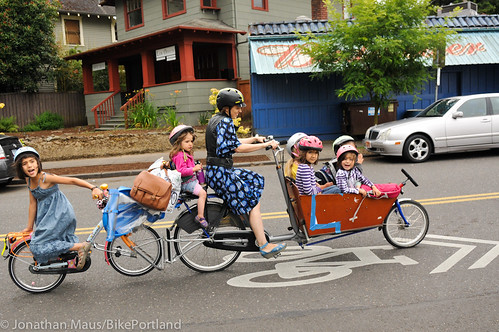
Maybe next it's time to ditch the car.


http://bikeportland.org/2012/06/28/with-six-kids-and-no-car-this-mom-does-it-all-by-bike-73731  


Now you've seriously become one of THOSE families.

All because you pressed one little seed into dirt and watered it.

Don't say I didn't warn you.


Please visit one of my sponsors
Bentley Seeds Inc.

Wednesday, April 13, 2011

Sunday, October 3, 2010

What's So Spiritual About Chickens?

My newest book, Zen and the Art of Raising Chickens: The Way of Hen comes out October 31, 2010. The book examines the renewed popularity of urban and suburban chicken ownership, and delves into how hen keeping can actually be a part of a spiritual life. It sounds silly  - and believe me, there is a lot of silliness about chickens - but when I looked more deeply at the reasons for the backyard chicken movement, I found a depth and meaning not immediately obvious.

People keep chickens in their backyards for sentimental reasons, or because they just like chickens. Raising one's own flock helps one become a little bit more self sufficient. Collecting a few brown eggs every day feels earthy and good. Given the price of free-range organic eggs, raising your own saves a little money. But the desire to keep hens goes beyond these reasons, too, or perhaps over time keeping chickens becomes more than that.

Raising birds in the backyard brings us right up close with the cycle of life. A chicken is a pet that offers us food, nourishing us both emotionally as all pets do and physically, just as we nourish them through our feeding and care. A small flock of farm animals juxtaposed with the bustle of city or suburban life offers hope, that we can have it all, that we are not bound by historical ways of thinking and categorizing, and that we can change. Keeping chickens is also a fun project, and embracing joy and simplicity are key parts of spiritual living.

Do you keep hens or know someone who does? Have you always dreamed of having your own chickens? What have you learned from hen keeping?

Tuesday, September 28, 2010

Preview Clea Danaan's Zen Chickens Online

My newest book, Zen and the Art of Raising Chickens: The Way of Hen will be out October 31, 2010, in the UK. You can "look inside" on Amazon.com and Amazon UK. You can only order it from the UK at this point, but if I get enough hits on the US site, a US publisher will be more likely to swoop in and bring it here.

This book is a part of a series done by Leaping Hare Press related to spiritual homesteading. I'm not sure which titles are forthcoming, but the companion to Zen Chickens is Meditation and the Art of Beekeeping by Mark Magill. I saw some of this before it came out and it looks equally fabulous. 


Enjoy!

Thursday, August 5, 2010

I posted a few weeks (months? my, time doth fly) ago about how one of our hens had gone broody, meaning she wanted to hatch some eggs. She hogged the egg box (the others could squeeze in and lay, but would have preferred their own space) and she stopped laying altogether. This meant a 33% reduction in our daily egg offering. Most hens don't just snap out of it, you either have to "break" them (which doesn't always work) by doing crazy things like setting them on ice cubes, or give them eggs to hatch. Since we don't have a cockerel, I had to find some fertile eggs. A lovely new friend of mine on a local backyard poultry meet-up group offered me six eggs, and when we got back from family vacation we slipped them under Sylvie just to see what would happen. I had no expectations. My primary goal was to gently break Sylvie of her obsession. Secondarily I would have liked to add another hen to our flock. My friend agreed to take back any males that might hatch and any extra females since we really only have room for a maximum of five hens.

Well. Five of the six eggs were broken and eaten by our chickens within a few weeks. I became vigilant then about fluffing the hay in the egg box, as our diligent "mama" was so good about digging a little egg hole right down to the wood of the box. I suspect this caused most of the breaks. I carefully checked on our one little egg, which slowly got rather worn looking compared to the fresh ones the other two were still laying. Then on day 20 (chicken eggs take 21 days to hatch), I held the egg up to my ear and heard a peep from inside! Oh, so exciting!

The next day my daughter and I checked on the egg and its adoptive mama several times over the course of four or five hours. I'm sure we were a total nuisance. First there was one little hole pecked (called pipping) and then a crack all the way around (zipping). Then we could see the orangey brown feathers, all wet and sleek still, peaking through a wide crack, but the baby wasn't yet free. Next time we checked, I found a smashed shell and no baby. We found it then on the other side of mama, still drying out, so sleepy from its hard work.

I checked on it several times, making sure it wasn't pushed out of the box again, as it once was. I wasn't sure what to do - move it? Leave it be? I read not to worry, mama will protect it from the other hens.

Sadly, this was not true. The next morning when mama took a break, another hen came in to lay an egg and pecked the baby to death. We buried it in the garden and my daughter named it Menda. She is very nonchalant about death, which I think is a good thing. When the existentialism of death hits when she's older, I hope the matter-of-factness of her experiences as a young child will help her through it.

I felt disappointed, but also glad to see the whole experiment through. Now I know that if we go this route again, we need to keep the hay fluffed. We need to be prepared to move mom and babies into a safe place on hatching day. At this point I don't have that safe place - in spring or fall the garage might work, but not in the heat of summer or the chill of winter.

And Sylvie? I'm not totally sure because she still sits in the box and ruffles her neck feathers every once in a while, but it seems she has snapped out of it. I'm glad for her sake, because broody hens eat very little and she's looking rather worn. She's been out and about, eating and being a normal chicken. She doesn't seem to be grieving the chick. So though I wish our chick had lived, I feel my primary goals were met and I know better what to do next time. I also have a hunch the little guy was in fact a guy, so we would have had to part ways at some point anyway. I hope for his sake he's happy nourishing the honeysuckle in the garden. He sure was cute.

Sunday, June 6, 2010

Broody Hen!

A few weeks ago we lost Maisy the hen to a neighborhood dog. She's still a part of our yard; we buried her near the garden and my daughter brings her flowers regularly.

Yesterday the new top hen, Sylvie, went broody. This means she sits in the egg box and pretends to warm eggs. At first I was surprised and concerned. I bought breeds that usually don't go broody. But she's still a hen, and here she is, stuck in the box. We don't have any extra room, and only one egg box, so I wasn't sure at first what to do for the other hens. Then I got the urge to get fertile eggs and stick them under her to hatch. Feels like destiny, since we just lost our other hen.

At first I thought - that's CRAZY. The last thing I need is another responsibility. But this urge was nearly as strong as the urge to have a kid myself (which I'm not feeling right now...). So I asked hubby - would you object to my getting two fertile eggs? He said no he didn't object as long as I do all the work.

I' d have to find homes for them if either is a rooster. I will have to research what we have to do for the hen. We have to isolate her, hook up another waterer and feeder. Not sure how we're going to do this. But I figured out how to make a waterer with used plastic containers, and our neighbor offered us a wire cage a few weeks ago that we can line with cardboard. I found a guy on Craigslist with fertile eggs. So. We'll see what happens - I'll keep you posted.

Tuesday, March 2, 2010

Is Keeping Chickens Right for You?


So you're considering raising a small flock of hens in your urban or suburban backyard, and you're wondering what it's really like. Is it a good fit for you? Here are a few things you might want to consider, both pros and cons.
  • Chickens poop a lot. The poop stinks (the runny kind - they make little round pellets that dry quickly and aren't so bad, and they make little stinky miniature cow pies). It's great for compost - I find the balance of nitrogen to carbon in the poopy shavings you get out of the coop to be just about perfect. It's fairly easy to spray the poop off the patio with a hose (get a sprayer attachment), and the grass likes it. It's not as gross as cat or dog feces.
  • They scratch. They love to demolish compost piles, mulch beds, garden beds, you name it. When we let our chickens free-range, we can count on needing to rake and sweep the pathways clean afterward. I contained my compost pile in wire mesh after having it flattened numerous times.
  • Chickens are curious. They aren't brilliant, but they aren't really dumb either. Leave open the backdoor or the garage door and they will go exploring. And they poop wherever they explore.
  • Egg production drops in the winter. There will be times when you will want to supplement with grocery store eggs and they just aren't as good - you get spoiled pretty fast. And there will be times when you have to give eggs away to friends and neighbors. We have four hens and we eat a lot of eggs, and that seems to be about right most of the time. We bought two dozen additional eggs a month this winter.
  • Chickens peck at the color red. So don't put a red shirt on your child when she goes to play with them. They will also peck fingers that are held out to them. And tiny toes.
  • Chickens are dusty. They take dust baths, they have shavings and hay, and they scratch in the dirt.
  • When they lay eggs, or when they want to lay an egg and another hen is in the box (you need one egg box for every six hens, although two doesn't hurt), they BAWK really loudly. So far the neighbors haven't cared. But you can't really keep them secret. Also, every child in your neighborhood will know you have them.
  • Chickens make sweet crooning noises when you talk to them. They have their own personalities (chickenalities?) and dispositions, just like any animal. Some will like humans, others will not. Ours are fine with our cats (the cats don't like the hens, though - but they don't go after them now that they are big as they are).
  • Hen care needs to be part of your routine. Every morning they need letting out and feeding and watering; every afternoon you need to check for eggs; every evening they need locking up and possibly feeding. You need to clean out the coop frequently. With out flock of four we do it once or twice a week. The deep litter technique of stirring it and letting it compost in the coop doesn't work well for our small coop.
  • When you go out in the morning to feed them and they make sweet curious crooning noises and you dump their litter in the compost, life is good. The garden is balanced. You've brought the country into the city. All is well.
Need more information? Check out mypetchicken.com and backyardchickens.com. Great websites with lots of information!

Tis the Season of Imbolc

One thing I love about celebrating the Wheel of the Year, which includes the Solstices, Equinoxes, and the four days at cross quarters to them, is that we get to celebrate an entire season rather than just a day that is then suddenly over. Right now we are celebrating Imbolc, which is on February second and comes six weeks after Yule and six weeks before Ostara. By "we" I mean my family, including our chickens. The girls pace back and forth in the run, anxious to be let out in the yard so they can search for the barest hint of green grass. They keep on scratching deeper and deeper as the ground thaws. Grow! they seem to be shouting at the earth. And as I said in an earlier blog, they are laying more eggs than they were just a few weeks ago.

Today when I let them out in the morning the ground was frozen solid. The dew point was near freezing, though, and we had frost on the ground. Frost is rare in my part of Colorado where it is usually too dry (as I understand frost and dew point and humidity). Where I grew up we had frost almost every morning in the winter and early spring. It's a peaceful sight to me, the gray frosting on the grass and leaves. At my daughter's playgroup/preschool we are discussing patterns and shapes in nature, so I was particularly noticing the shapes of the frost. My favorite little snapshot of the morning was a black chicken feather rimmed with frost crystals.

I know the ground will thaw and we'll soon plant peas. For now I'm enjoying the return of the light (or living room is so bright in the morning!) and the scent of spring in the air, just under the chill.

Sunday, February 21, 2010

Signs of Spring: More Eggs!

There is snow on the ground and it's cold outside. In Colorado, March tends to be the snowiest month, and this year is an El Nino year so we're due to have several big wet spring snows. Spring feels really far away. Even spring planting in the garden like peas and spinach feel painfully far off.

But we've just begun to see one sign of spring. Our chickens are laying more eggs. All winter, with the shorter days and winter molting, we've gotten no more than one egg a day from our small flock of four birds. But in the last week, they've begun laying three eggs a day. We give them no artificial light or heat; it's the longer days that is kicking them into higher production. This is the first spring we will have chickens, as they are just about a year old now. I'm enjoying the unexpected sign that spring really is on its way.

Obviously this is why Ostara, the spring equinox, is celebrated with eggs! We celebrate the return of nourishment through one of these simple signs of spring. By keeping chickens we are learning more about the natural cycles of the Wheel of the Year and how they manifest.

Thursday, August 13, 2009

Letting Go of Garden Losses

Maybe next year I'll follow my own advice. I gave it to myself last year, but apparently I wasn't listening.

Last year I swore I would not plant any gourds - no squash, melon, or pumpkins. The squirrels eat all of them. No matter what. I wrap them in bird netting and cover them with blood meal (or menstrual blood, but this year all that is nourishing my babe - don't mean to gross anyone out, just telling it like it is). I can't spritz them with pepper spray because I fear it would get into my child's eyes and mouth.

I also told myself not to plant corn. Takes up tons of space, uses lots of water, and fertilization is spotty.

Much of my garden right now is squirrel-ravaged gourds and short, spotty corn. Also green tomatoes that are just thinking about turning red. Maybe. Tiny carrots and beets that don't seem to want to get bigger. A teensy patch of fall spinach in the middle of a bed I over planted with seeds that never germinated, or maybe got scratched by chickens.

The garden actually looks pretty good because all those squash and pumpkin plants have huge, vibrant leaves. With sunflowers (minus the actual flower) poking up in their midst. And corn that looks like it's getting somewhere. And huge bushy cherry tomato plants. Dotted with lots of little green orbs. But we're not eating much out of the patches right now. Oh well.

Being 35 weeks pregnant gives one a certain dose of accepting reality. The garden is what it is. We've had lots of lettuce, the carrots and beets and chard may be smallish but are yummy. The tomatoes will ripen, or in early September I'll make green tomato soups. The squash plants get added to the compost (probably why I have so many squash plant volunteers this year - last year's squirrel food!).

And next year I am planting only the things my family eats and squirrels don't, like green beans, tomatoes, and more carrots. Maybe. I'll let you know if I actually manage to follow my own advice to myself. By then I'll have a four year old and a baby starting to crawl. In addition to chickens and squirrels. Hmm.

Saturday, August 1, 2009

Ack! The Chickens are Drving Me Batty!


So I love my four renegade chickens. Renegade because we're kind of violating zoning laws to have them. But they are much quieter than our neighbors' dogs, we keep the coop safe and clean, and they will, I hope, soon lay eggs.

Meanwhile.

They love more than anything to do their little diggy chicken dance in bare dirt. Which in my garden means where I have just planted fall seeds. My daughter and I put in cabbage, spinach, carrots, mache, peas and chard. The chickens watched, blinking from bottom to top (did you know chickens blink upside-down?) with their orange eyes thinking, yes, my pretties, yes.... and then as soon as my back was turned they danced their happy selves across the dirt. And the bird netting we put up to keep them out. Then they ate the leaves off my only Brussel's sprout plant, which was only three inches tall and not getting taller, but still.

And then. They waddle over to the back patio and poop as all grazers do, randomly, prefering the same spots we prefer to walk. Like the door mat and under the patio table. My daughter shouts, "Just look out for the slimy poo right outside the door!" So I use the hose sprayer and spray down the patio and the mat, feeling bad for using so much water (the broom us just a mess for this task). I set the mat on the grass to dry. Ten minutes later it has three chicken turds on it.

They've been staying in the yard so far, but the other day it was cloudy and cool, so the driveway at the side of the house wasn't such a hot desert. Chickens like shade. They stay away from hot sun. They also like to explore. So once the driveway was not so hot, they thought they'd go check out the neighborhood. Did I mention we're not really supposed to have chickens?

So I, big pregnant belly and all, rigged up a makeshift fence between the garage and house. My materials included a rotted, nail-infested old porch banister and some leftover lengths of hardware cloth from the chicken run. It won't keep them in if they really want to go exploring (only a matter of time), but it will slow them down. Not safe for when the baby starts crawling, though.

Time for some real boundaries. Such a theme in my house these days, what with an almost-four-year-old princess, two spoiled cats, and now four cocky chickens.

My plan is to get some flexible fencing like deer netting and fence off a section of yard extending their run. It won't be safe from predators like the run and coop are, so we'll still have to put them in at night and keep half an eye on them, but it will keep them contained, give them more room to roam, and give them a shady area to play in.

Now I just have to do that project. After I do a few loads of laundry and bake some bread. The homesteading dream!

Sunday, July 26, 2009

Fall Planting! Tips from the garden...

"What're you doing, Mommy?" my three-year-old daughter asked, finding me sifting through seed packs in the hallway.

"Getting ready to plant fall veggies."

"Can I help?"

"Yes! We'll plant them tomorrow." Both of us smiled in rapture. My girl loves planting as much as I do.

I picked out spinach, carrots, peas, broccoli, cabbage, parsley, mache (aka corn salad), and chard. We already planted some seeds in a cleared bed - mostly mustard greens and beets - but since they haven't germinated I'm going to do the paper towel technique with this next planting. Put your seeds - just as much as you want to plant or slightly more if your seeds are a few years old - between a fold of damp paper towel and put into a plastic bag. Keep checking them and in a few days they will have germinated. Then carefully transplant to the garden (you can do this in summer because the soil is not freezing) into soil amended with compost (a tweezers works well for this task, picking up teeny rooting seeds and plopping them in the soil). Our compost is very high in nitrogen because of all the beautiful chicken poo we've been blessed with this year.

On a side note, if you have chickens or plan to, I highly recommend putting your compost in a shady area and either doing it as a simple pile as I do or in an open cage that is accessable from one side. It is our chickens' favorite hang out: cool, buggy, and speckled with little kitchen scraps. They turn the compost for us as they scratch and they poop all over the pile, adding nitrogen. We also toss all the cleanings from their run and coop on the pile and turn it in. Their poop is so high in nitrogen that a once a week cleaning of the chicken area yeilds a perfect balance of carbon (wood shavings) to nitrogen (manure). The compost breaks down very quickly and we can use it on the garden in a month or so. I have not had any problem "burning" my plants with manure that has not broken down enough with this technique even though it hasn't been composting long.

Anyway - tomorrow we will cover the beds with compost, weed, and get everything ready for seeds. We'll put some seeds in right away - carrot, parsley, peas (which I will soak tonight) - and others in a few days after they have germinated in their paper towel blankies.

Whee! So much fun.

Monday, June 8, 2009

Chicken Meditation

Another thing I didn't know about chickens: watching them poke about my yard is a calming meditation. Thought I'd share it with you here. The film quality is a bit choppy - kind of reminiscent of old film footage, but in color!

Enjoy...


As these four little free rangers, Maisy, Millie, Sylvie and Tallulah, wander about my yard, pecking, picking and clucking, time slows and life is good.

Thursday, June 4, 2009

10 Things I Didn't Know About Chickens


...Until I raised four of my own in our suburban backyard (and this is pre-egglaying, so there is more to learn). In no particular order...

1. They put themselves to bed at night. Come dusk, they hop up into the coop and tuck in. Our four pile up on each other in a corner of the coop, though I keep adjusting their roost to see if I can entice them on to it. We shall see.

2. They are totally fun to just watch. A running chicken is really one of the funniest things ever. And no, I don't have to chase them, they run all the time as they poke around our yard. They sit in funny poses, they take dust baths, they do a little chicken dance to scratch at the dirt. Totally entertaining. Anyone who has chickens knows what I mean, and anyone who doesn't will think I've gone off the deep end. Which maybe I have.

3. They cost almost nothing to keep. I bought a fifty pound bag of chicken feed for less than $25. That will eventually get turned into eggs (the freshest there is!), and is already turning into awesome compost. My cats cannot boast such economy.

4. Along the compost theme, the nitrogen/carbon ratio of chicken poo to wood shavings we get from the coop, which we clean less than once a week, is ideal and breaks down very quickly. And it doesn't stink. I can smell it, but it's not unpleasant. (Poor cats. Can you see a theme here?)

5. They are really soft. Chickens look all tough and nearly reptilian, but their feathers are very soft. So are their legs. Who knew?

6. They make sweet crooning noises when they come over to say hi. Which they do whenever I sit in one place. One of our chickens is more imprinted on us, and therefore more friendly, but they all come over and croon. It's probably a plea for treats, but it's a very sweet sound. I also love the way they look at me: part curiosity, part affection, part wariness. All chicken.

7. They are fascinated with my cats. And not afraid of them at all. In fact, my boy cat is afraid of them. He is twice their size (but they're catching up to him). They are actually fascinated with just about everything, though somewhat easily spooked. They are chickens, after all.

8. I thought all chickens loved earthworms. Not ours. But they can catch a small green spider in the blink of an eye, and apparently they eat mosquitoes, too.

9. They eat dandelion seeds. Since I don't use any weed killer, this is a nice bonus. I have four chickens and a thousand dandelions, so you can guess who is winning, but it's a start. They also love pansies. Sigh.

10. They are really quiet. Apparently when they lay an egg they like to announce it, but for now the loudest squawk is quieter than a crow or a jay. Can't say the same for my neighbors' barky dogs. And no, we do not have a rooster, which you do not need to get eggs, so we do not bother the neighbors.

Can you tell I'm hooked? If you're considering chickens, I have three words of advice: Go for it! You'll love them!

Sunday, May 17, 2009

Happiness is Living the Farm Life in the Suburbs


This moment comes awfully close to my dream life. It's Sunday morning, the chickens have been fed and let to range, then shooed back into the run to get them out of the seedlings doing so well in the garden. We had buckwheat gluten free berry pancakes with organic yogurt for breakfast. Our bathtub is being remodeled, so we're heating water on the stove to give my little girl a bath outside. My husband started a little fire in our portable fire pit. He's going to get some yard work done (thank you!) while I get in some writing. I have to finish my thesis, the beginning of a novel, by the end of the month.

It's been a crazy time: hubby needed a crown on his tooth, I need new glasses, we'll have a hospital birth to pay for by the fall, we had to replace all our plumbing (small houses can really be a blessing) and our bathtub (credit card promo checks only way to go with no equity right now), and hubby got in a fender bender - his fault - last night. On one income, all that is deeply stressful. It's easy to feel overwhelmed. And I can't even take a soothing bath right now to de-stress!

But I turn on the news and hear about swine flu, flooding, genocide...; I hear my neighbor yell at his kids, and they yell back; a dear friend is still reeling from her brother's suicide. Life is hard. Yet here I sit, smelling campfire, watching chickens and children mature, we're healthy, the garden is growing (we've had RAIN this spring!), and I'm writing to you, dear reader. The sights and smells make me feel like I'm a writing mama on the farm, though we live in working class suburbia. I feel so very deeply blessed. And despite the overwhelm, so very happy.

Blessings to you, dear reader.